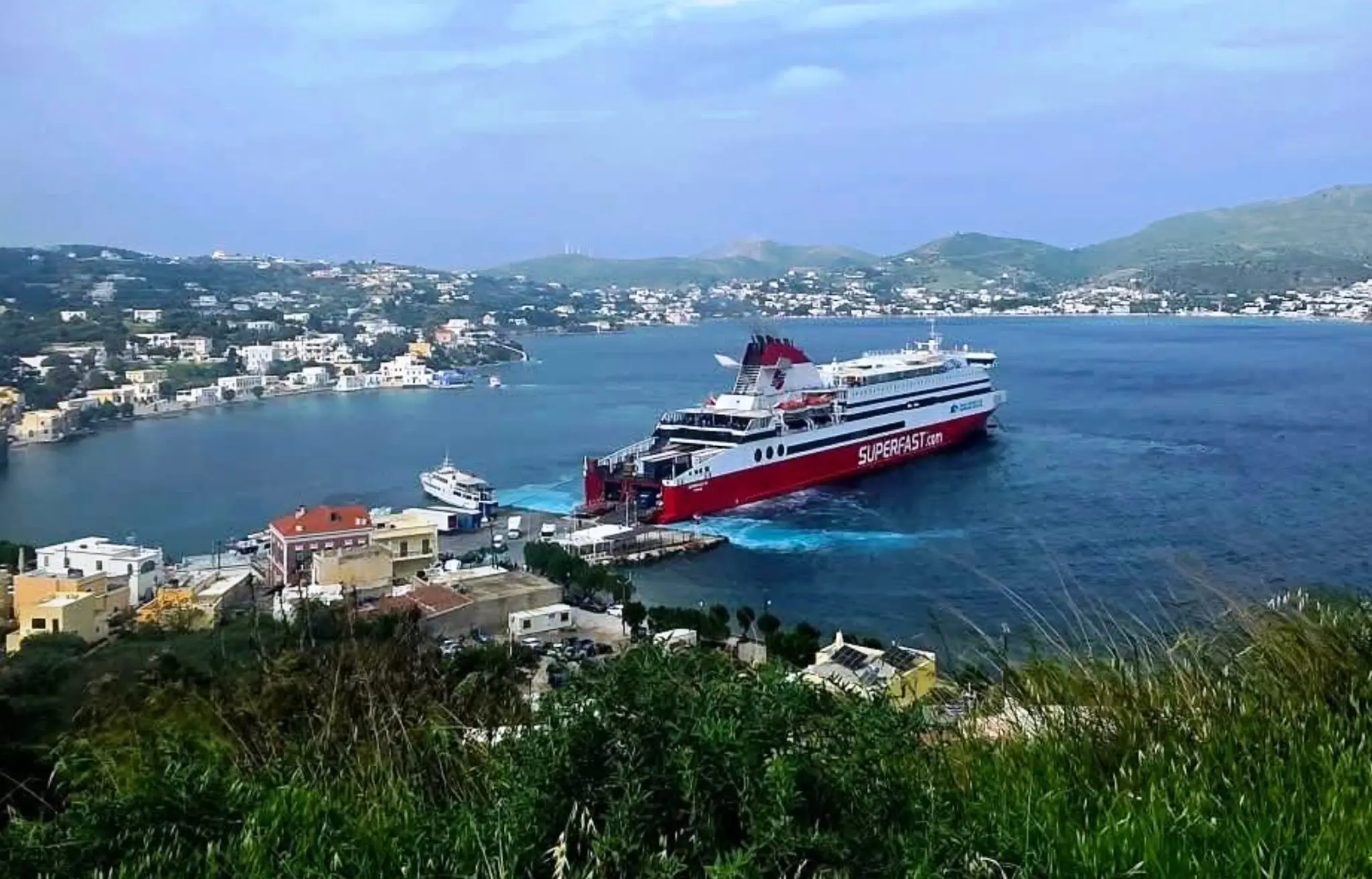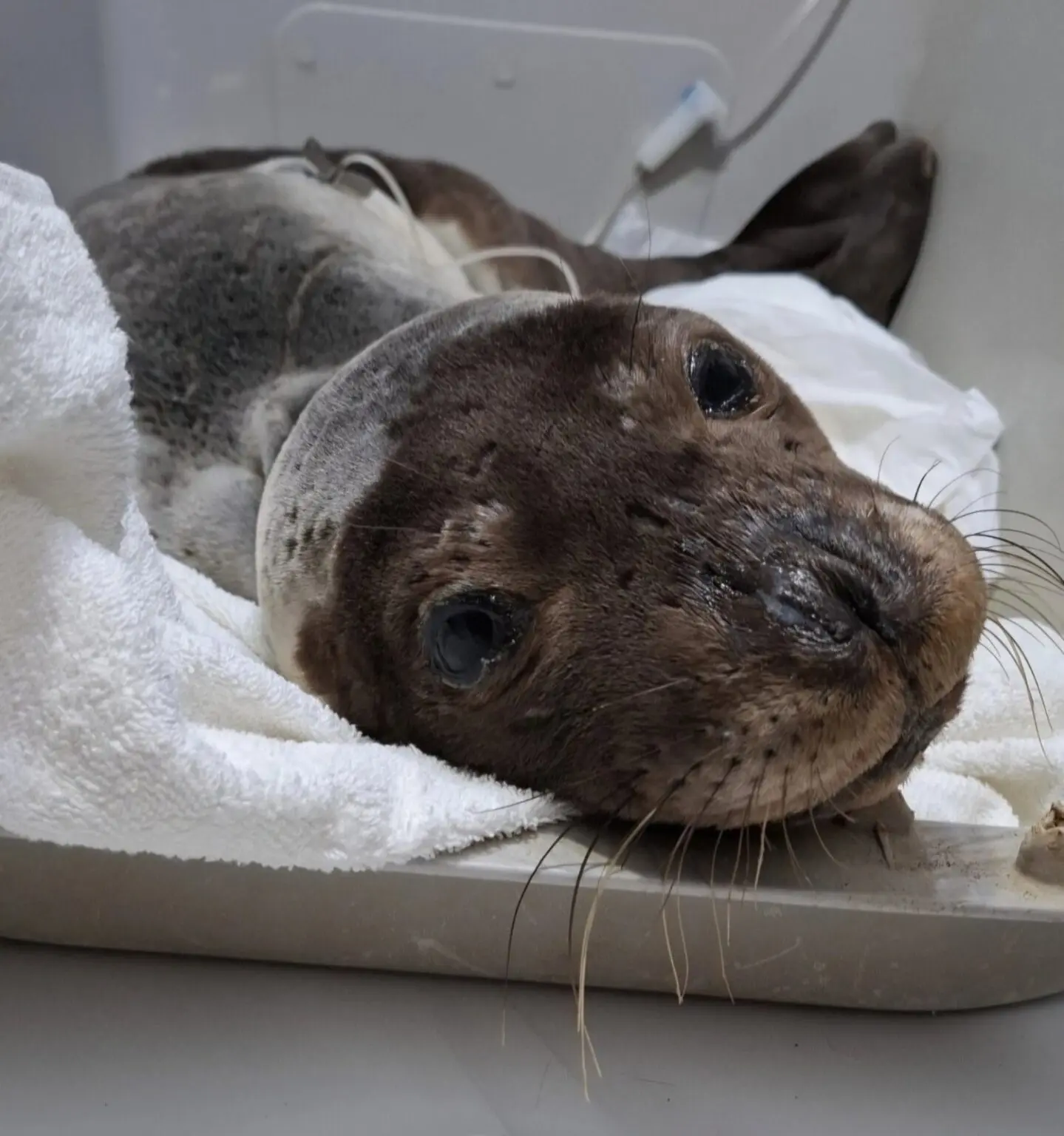










Archipelagos Institute of Marine Conservation has raised serious questions about Greece's arrangements and facilities for treating marine wildlife following the transfer of a young seal found on Lipsi to Attica Zoological Park. The long journey began by inflatable boat to Leros, with valuable assistance from a Leros vet, followed by a passenger ferry to Piraeus and a road journey to the park, where the seal rehabilitation centre is based.

Archipelagos stresses that following the prescribed procedures does not mean it agrees with the situation that continues to prevail in Greece regarding the care of marine wildlife.
Researchers from Archipelagos responded immediately after being alerted by Lipsi residents. Following the existing procedure, they informed MOm and arranged for the seal pup's transfer. The institute says that, in its assessment and in line with international experience, more time should have been allowed for a possible reunion with its mother, provided first aid and appropriate care were available on site. It notes that both its researchers and island residents had seen adult seals in the area.
The institute reiterates that complying with the prescribed procedures does not imply agreement with Greece's continuing approach to the rehabilitation of marine species.
Questions raised by Archipelagos
- The institute asks why it is considered normal and acceptable for wild animals needing care, whether marine or terrestrial, to endure long and frightening journeys for the convenience of rehabilitation providers. It highlights the stress of moving an animal from its natural environment into a box and through places with intense human disturbance. It says animals often travel unaccompanied on ferries or in vehicles, sometimes even in car boots, crossing the country to reach Athens or, in its view worse still, a zoo. Where even basic treatment can be provided locally, it argues, the chances of survival and successful release or reintegration increase substantially.
- Archipelagos questions why, after decades of limited improvement, wildlife rehabilitation is still considered something that can be managed from Athens, far from the animals' natural habitats. It alleges that this arrangement suits a small group of people who have appointed themselves Greece's sole experts, have advised the relevant state authorities for years and have obstructed efforts to provide wildlife care outside Athens.
- The institute asks why the national seal rehabilitation and reintegration centre on Alonissos never opened despite costing more than €1.5 million in public funds. It alleges that the building was abandoned immediately after construction and allowed to become a stable. It questions the facilities at the rehabilitation centre inside Attica Zoological Park, presented as the only alternative, and argues that this arrangement lends public legitimacy to a business that profits from displaying wild animals.

Archipelagos also reports that an on-site inspection recently took place at the Mediterranean monk seal rehabilitation centre within Attica Zoological Park, as part of a criminal investigation into treatment conditions opened by the Environmental Prosecutor. Institute representatives attended as requested. It highlights the following concerns about the centre:
- According to the institute, the facility consists of just two containers inside a visitor attraction, surrounded by captive animals, including elephants and giraffes, with smells from animal waste and noise from crowds. It alleges that many visitors are directed to look through openings in a container at seals receiving treatment. It also criticises the conditions in which dolphins and seals are displayed in chlorinated concrete pools at the park.
- Archipelagos alleges a clear conflict of interest involving the chair of the committee appointed by the Environment Ministry to license rehabilitation centres, including this one. It says she served for years as the centre's scientific director and also works with Attica Zoological Park. The institute further alleges that the same committee has repeatedly delayed licensing of the Aegean Marine Life Sanctuary on Lipsi and has formally opposed it.

After more than seven years of procedures and repeated delays, the Aegean Marine Life Sanctuary on Lipsi received its first operating licence, making its operation fully lawful, Archipelagos says. However, that licence covers only sea turtles; an extension is still pending for its more demanding core aim of treating marine mammals. The institute says the centre has both the necessary infrastructure and an international team with extensive experience in marine wildlife rehabilitation. The team is open to working with others committed to improving care in Greece and training a new generation of vets whose approach prioritises animal welfare. The project was developed primarily to treat dolphins and other cetaceans. Archipelagos alleges that, in the absence of suitable facilities in Greece, such animals continue to be pushed back out to sea and do not survive, even when these actions are described as successful interventions. It says it will return to this serious issue.
The institute emphasises that protecting wild animals and safeguarding their welfare remain its central priorities. Despite any differences or disagreements, it remains open to cooperation that can help resolve the substantial problems affecting wildlife rehabilitation, particularly for marine species.
Archipelagos says it cannot accept a continuing situation that endangers rare species and frequently results in deaths, especially among dolphins, which cannot be treated without suitable facilities such as those created on Lipsi. It calls for recognition of the shared responsibility to protect the unique biodiversity that still survives in Greece.
For Archipelagos Institute of Marine Conservation:
Thodoris Tsimpidis — t.tsimpidis@archipelago.gr