








Public transport ticket prices have risen substantially in 14 European capitals over the past three years, according to a new report from Greenpeace Central and Eastern Europe.
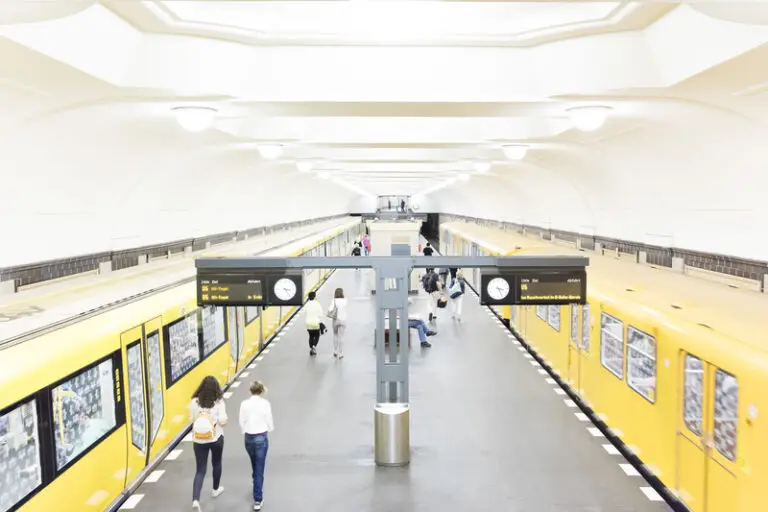
The report examined the availability and affordability of monthly and annual public transport passes across the EU’s 27 member states, the United Kingdom, Switzerland and Norway, and their capitals. The largest increases in long-term fares since 2023 were recorded in Nicosia, at 67%, Amsterdam, at 55%, Madrid, at 50%, Bratislava, at 32%, Berlin, at 29%, and Vienna, at 26%. Only eight of the 30 countries analysed offer some form of climate ticket. In Germany and Austria, however, prices have risen by almost 30% since those schemes began.
Greece ranked 29th, second from bottom, with two points out of 100, because it lacks an integrated ticketing system, a climate ticket or another nationwide option at a stable, affordable price. The report also notes its 13% VAT rate on public transport, which it regards as only moderately favourable compared with other countries.
Although Greece performed poorly in the national ranking, Athens placed sixth among capitals, scoring 88.5 out of 100 because its annual fare has remained unchanged since 2023. A standard annual pass costs €300, equivalent to €0.98 a day after price-level adjustment. Registered unemployed people, school pupils, people with disabilities and, where applicable, their companions can travel free. Young people aged seven to 18, students, people over 65 and members of large families qualify for a 50% discount on long-term passes. Nevertheless, Greenpeace says affordability, quality and service frequency remain issues in Athens and calls for safe, accessible and sustainable transport throughout Greece.
On the positive side, long-term public transport fares have fallen since 2023 in four capitals: Dublin, by 42.5%, Oslo, by 11.5%, Bern, by 6.6%, and Budapest, by 5.8%. They are unchanged in 12 capitals. Spain and Slovenia have introduced forms of national public transport tickets since 2023. Even so, only eight of the 30 countries offer free public transport or affordable long-term passes for general use.
Greenpeace Central and Eastern Europe transport expert Herwig Schuster said it was unacceptable for public transport to remain unaffordable for so many people while households faced rising living costs and Europe experienced heatwaves, droughts and other extremes. Disruption around the Strait of Hormuz and wars in the Middle East and Ukraine had highlighted Europe’s vulnerability to fossil-fuel price swings and supply-chain shocks, he said. Governments serious about energy sovereignty, security and climate action needed to reduce oil dependence. Affordable climate tickets were among the quickest ways to cut emissions, reduce fossil-fuel reliance and support people.
Transport accounts for a substantial share of European household spending, so rising fossil-fuel and travel costs reduce money available for other needs. Greenpeace notes that transport is the only EU sector with rising greenhouse-gas emissions, largely because of oil-powered vehicles and aircraft. It says transport uses 65% of the EU’s oil and is a major driver of extraction and production. During geopolitical instability and energy crises, failing to act on transport is therefore a failure of economic and security policy as well as climate and social policy, the organisation argues.
Greenpeace calls on national and local governments to introduce affordable public transport climate tickets and urges the European Commission to support a European scheme through mechanisms such as the Social Climate Fund. As European Mobility Week begins, the organisation also calls for Greece to make expansion of its national rail network an immediate priority, with the highest standards of sustainability, safety and affordability, alongside stronger rail-based and other public transport.