

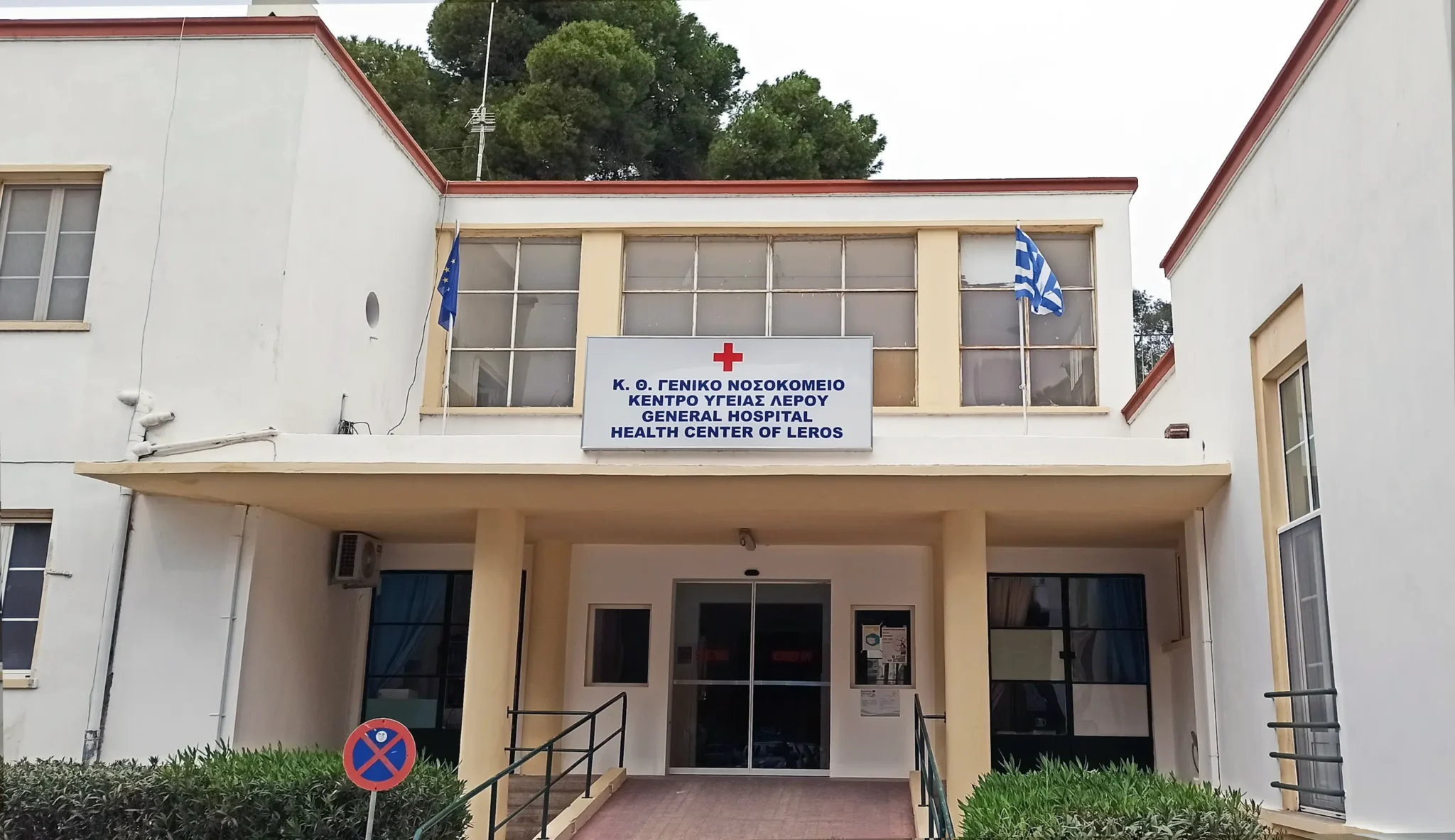









The union representing doctors at Leros Hospital and nearby island health services issued a press release warning that serious staff shortages were compromising public healthcare at the height of the summer season.
Under the headline, 'At destinations of the tourism miracle, try not to fall ill: the celebrations abound, but the doctors are missing', the union described Leros Hospital as a characteristic example of how public health services were actually operating on the islands while thousands of residents, workers and visitors were present.
It said Leros Hospital had no cardiologist, as had been the case for months. There was no radiologist and none was expected before the end of the month. The microbiology laboratory had only one microbiologist to cover all the hospital's needs, while there was no general practitioner assigned to the Accident and Emergency Department and Health Centre.
Rural service doctors were again being asked to carry the burden of emergency care without the necessary presence of a specialist general practitioner or the support of essential medical specialties, the union said.
The absence of a cardiologist affected more than cardiac cases. It influenced the management of all emergencies, patients' pre-operative assessment and the operation of surgical departments, while leading to additional transfers and the postponement of planned procedures.
At the same time, the Leros Hospital artificial kidney unit had taken on about half of the patients who normally received dialysis on Kalymnos, after a water contamination problem at the Kalymnos unit.
The union cited the hospital's sole nephrologist as an example of what it considered the consequences of ending full and exclusive employment for doctors in Greece's National Health System. It alleged that he also worked for about half of each month at a private clinic in Athens, leaving the dialysis unit without the physical presence of a specialist for a significant part of the month, including while it was caring for additional patients from Kalymnos.
The union said this was not a personal matter or an isolated case. In its view, it reflected government policy allowing doctors employed by the National Health System to work privately at the same time, further weakening already understaffed public services, particularly hospitals on remote islands.
It argued that instead of substantially increasing hospital doctors' pay, improving working conditions, recruiting permanent staff on a large scale and introducing meaningful incentives for health professionals to settle and remain on the islands, the government had in practice ended full and exclusive employment and strengthened the links between the public health system and private healthcare businesses.
Care for dialysis patients could not depend on temporary solutions, telephone instructions or extraordinary efforts by the remaining staff, the union said. The daily physical presence of a specialist nephrologist was a necessary condition for the safe operation of the artificial kidney unit.
A few days earlier, the health minister had visited Kalymnos and formally opened the hospital's Accident and Emergency Department. The union said the department was operating without the necessary permanent specialist medical staff, just as the Leros Hospital emergency department was.
It described the government's idea of an upgrade as new signs, painted walls, ribbons, opening ceremonies and photographs, without the doctors and staff required for public health facilities to operate safely.
The union stressed that this was neither an isolated incident nor a temporary malfunction. For more than a decade it had repeatedly used statements, interventions and memoranda to highlight serious shortages of doctors, nurses and other staff at Leros Hospital, Patmos Health Centre and the multipurpose regional clinics on Lipsi and Agathonisi.
For more than a decade, it said, the union had warned that hospitals, health centres and regional clinics could not rely on a single doctor in a specialty, rural service doctors, continuous staff transfers and temporary arrangements. Its warnings had not been heard, and in many cases the shortages had grown.
Critical specialties remained vacant, others were covered by a single doctor and staff were expected to work under constant pressure, excessive workloads and professional exhaustion.
The union said the present situation could not be attributed to a sudden or unforeseeable event. It blamed long-standing political choices by successive governments that left permanent posts vacant and relied on transfers, temporary contracts, compulsory orders and makeshift solutions.
It said the reality in destinations promoted as part of a tourism miracle was revealing. Billions of euros in tourism profits went to large businesses, while public health services operated precariously and island residents, seasonal workers and visitors were not guaranteed comprehensive and safe public care.
The government's claim that island healthcare needs were fully covered was contradicted every day by the experience of staff and patients, the union added.
While this was the situation on Leros and Kalymnos, it said, government ceremonies continued. On 22 July 2026, government officials, the health minister and local MPs were due to visit Patmos Health Centre for the opening of its refurbished building.
The union compared the planned event to the publicity surrounding the World Cup and slogans about love for humanity, while reality told a very different story.
According to public comments by the mayor of Patmos, the health centre refurbishment cost about EUR 1.5 million. The union said legitimate questions arose about the exact physical and financial scope of the work and how such a substantial sum had been used. It argued that EUR 1.5 million could potentially fund a new and modern healthcare unit, rather than simply refurbish a building.
Behind the ribbons, photographs and celebratory statements, the union said, the reality could not be hidden: Patmos Health Centre could not operate without continuous transfers of staff, mainly doctors, from other health units that were themselves already understaffed.
It asked what new era was being inaugurated: one in which health centres could not operate without doctors being repeatedly moved from other understaffed services, buildings were renovated but permanent staff were not hired, and a doctor transferred from Leros to Patmos was presented as reinforcement even though the move simply shifted the vacancy from one island to another.
Renovating a building could not be presented as an upgrade when the people needed to operate it had not been secured, the statement said. Moving a doctor from one understaffed unit to another could not be called reinforcement when it created another gap elsewhere.
Healthcare for island residents and visitors could not depend on temporary arrangements, compulsory transfers at short notice and the exhaustion of health workers.
The union said the shortages were neither accidental nor temporary, but the result of treating health as a commodity, chronic underfunding, understaffing and operating public services according to a cost-benefit test. It said successive governments had followed that policy and the present government had intensified it.
That policy left islands without essential medical specialties, ended full and exclusive employment for National Health System doctors and opened new opportunities for private healthcare groups, it said.
Doctors' union demands
The union said island communities did not need more ribbons, ceremonies and publicity events. It called for the following measures:
- Immediate recruitment of cardiologists, radiologists, general practitioners and all other critical specialties at Leros Hospital.
- Additional microbiologists to ensure that the microbiology laboratory operates continuously and safely.
- More permanent nephrologists and daily operation of the artificial kidney unit with a specialist nephrologist physically present.
- Full staffing of the Accident and Emergency Department and Health Centre with permanent specialist doctors.
- Restoration of full and exclusive employment for National Health System doctors, with meaningful pay rises and humane working conditions.
- Large-scale recruitment of permanent medical, nursing, allied health and other staff.
- No use of compulsory transfers from other understaffed services to fill vacancies.
- Immediate payment of all established incentives for doctors serving on remote islands.
- A permanently funded free housing programme for health workers and other public employees serving in island and hard-to-reach areas.
- Fully staffed, modern hospitals, health centres and multipurpose regional clinics that remain exclusively public and free at the point of use.
The health of island residents, workers and visitors could not be treated as a cost, the union concluded. Healthcare was not a commodity but a social right.
The statement was issued by the union's board and signed by its president, G Tsoukalas, and general secretary, G Torlakidis.
Read more from Leros News in English.