





After a month of protests over the future of fishing, the government has not taken a single measure aimed at sustainability and the recovery of fish stocks.
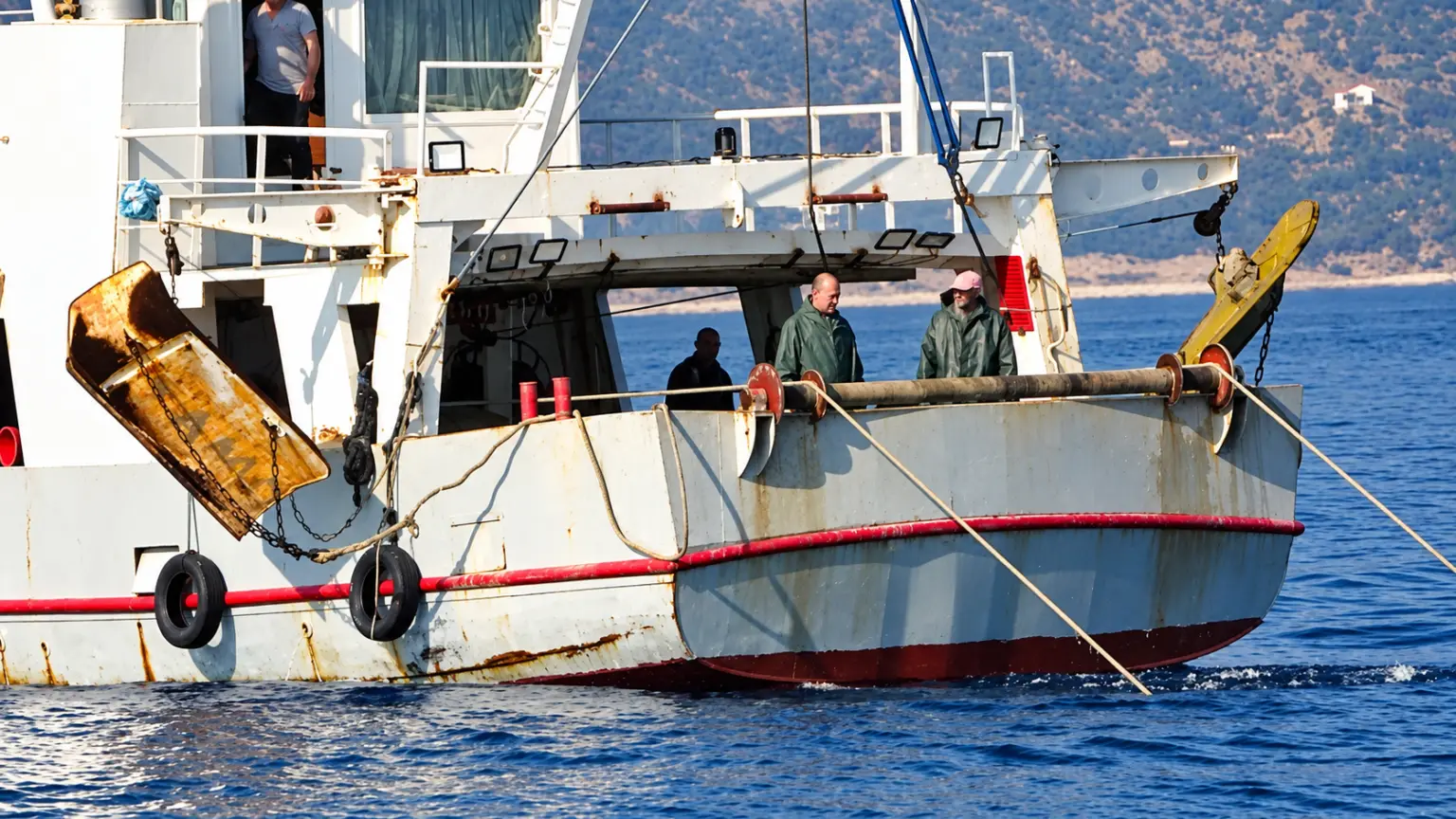
Instead, the Ministry of Rural Development and Food has announced, as a support measure, a publicly funded subsidy for the tax-free diesel that fishers already receive. The measure benefits almost exclusively the approximately 230 trawlers, as the low-powered engines on most of the more than 11,000 small fishing vessels cannot use this type of fuel.
Even more paradoxically, the subsidy is higher in spring, increasing fishing pressure during the fish breeding season. For that same period, the ministry should instead provide financial support for a temporary halt to fishing activity, helping fish stocks recover.
This follows revelations and a complaint to the European Public Prosecutor’s Office by the Archipelagos Institute of Marine Conservation over the LEADER Fisheries funding scandal. The institute alleges that at least €52 million intended to support fishing communities was diverted into investments supposedly “necessary” for the fishing sector, such as villas with swimming pools in the mountains, eye clinics, beauty centres and luxury boats. The government continues to respond in general terms and avoid the substance of the issue, even though the case has received widespread publicity and related questions have been tabled in both the Hellenic Parliament and the European Parliament.
Rather than supporting sustainable fishing, the government continues to provide thousands of tonnes of fuel that is not only tax-free but also subsidised, supporting the use of one of the most destructive fishing methods: trawling. Operating from the country’s main fishing ports, trawlers head in coordinated groups to remote waters, depleting fish stocks and destroying productive marine ecosystems. In doing so, they endanger the survival of coastal communities, particularly on the Aegean’s border islands.


The border islands are often the setting for grand statements. A telling example of the gap between words and action is the Prime Minister’s statement during his visit to Agathonisi last July that his “priority and responsibility is to support the local community so that residents can prosper”. Indicative of the government’s approach to the sustainability of small islands is that, while there was no explanation of how they would become sustainable, there was a promise to provide electric cars on an island with a road network of 3 km. It is noteworthy that, in just ten years, the island’s population has already fallen by at least 50%, with a comparable decline on most other islands outside the tourist season.
On Agathonisi, as on many other small Aegean islands, fresh water is scarce and cultivable land minimal. For thousands of years, the islands’ only “fertile plain” has been the sea around them. Residents’ survival has depended heavily on fishing resources and the produce of the sea. The few people still fighting to remain on their islands continue to depend on those same resources. Supporting the local community of Agathonisi and other comparable small islands therefore means protecting the fishing and marine resources that sustain them.
Watch an extract from the documentary Ocean with David Attenborough, showing the damage caused when a trawler drags its nets across the seabed.
The ministry’s announcements reflect yet another destructive plan for the future of fishing and our seas. Even the most basic management measures sought by coastal fishers and all of us working for the recovery of fish stocks are absent. The new measures will intensify overfishing and accelerate the destruction of productive marine ecosystems, making fishing even less sustainable. At the same time, degraded ecosystems and fewer natural predators will favour the spread of invasive species, such as pufferfish and lionfish.
Inevitably, more and more coastal fishers will be forced to leave their profession and their home communities. The consequences will be more severe on the small Aegean islands, where fishing is a main source of livelihood.
At such a critical time for marine ecosystems and the fishing sector, amid so many promising announcements, national and EU funding for fisheries should provide a lifeline. It should finance meaningful measures to restore fish stocks that have declined dramatically, rather than measures that encourage overfishing and the further destruction of our seas.
Above all, we need politicians with genuine knowledge and understanding of fisheries. Otherwise, policy decisions will continue to make matters worse and prove destructive both for the sustainability of marine resources and for the communities that depend on them.