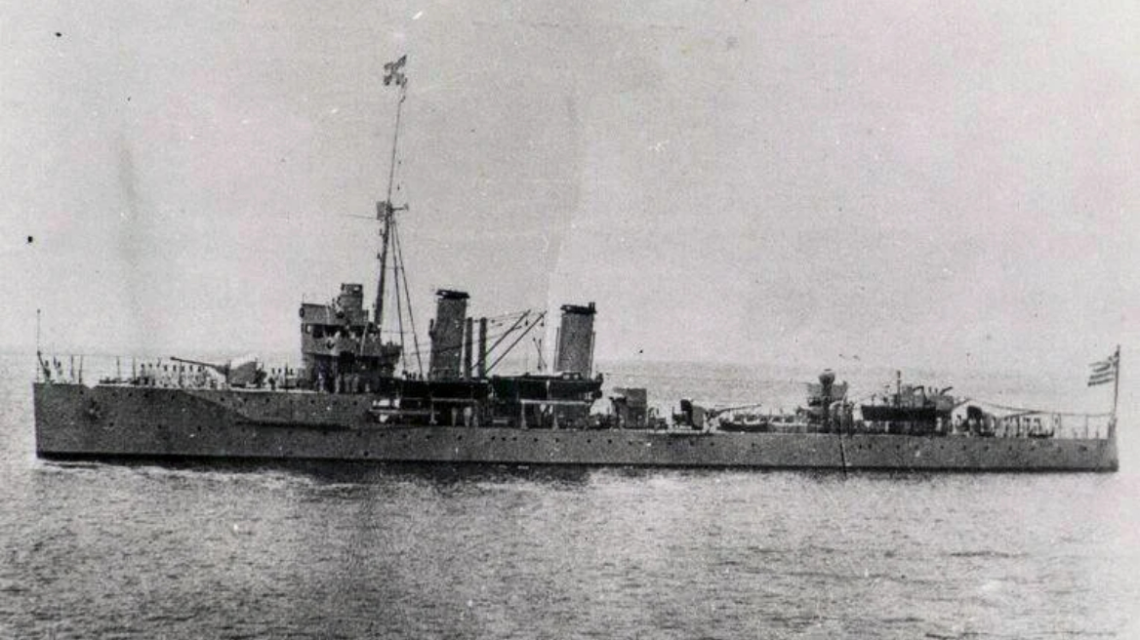


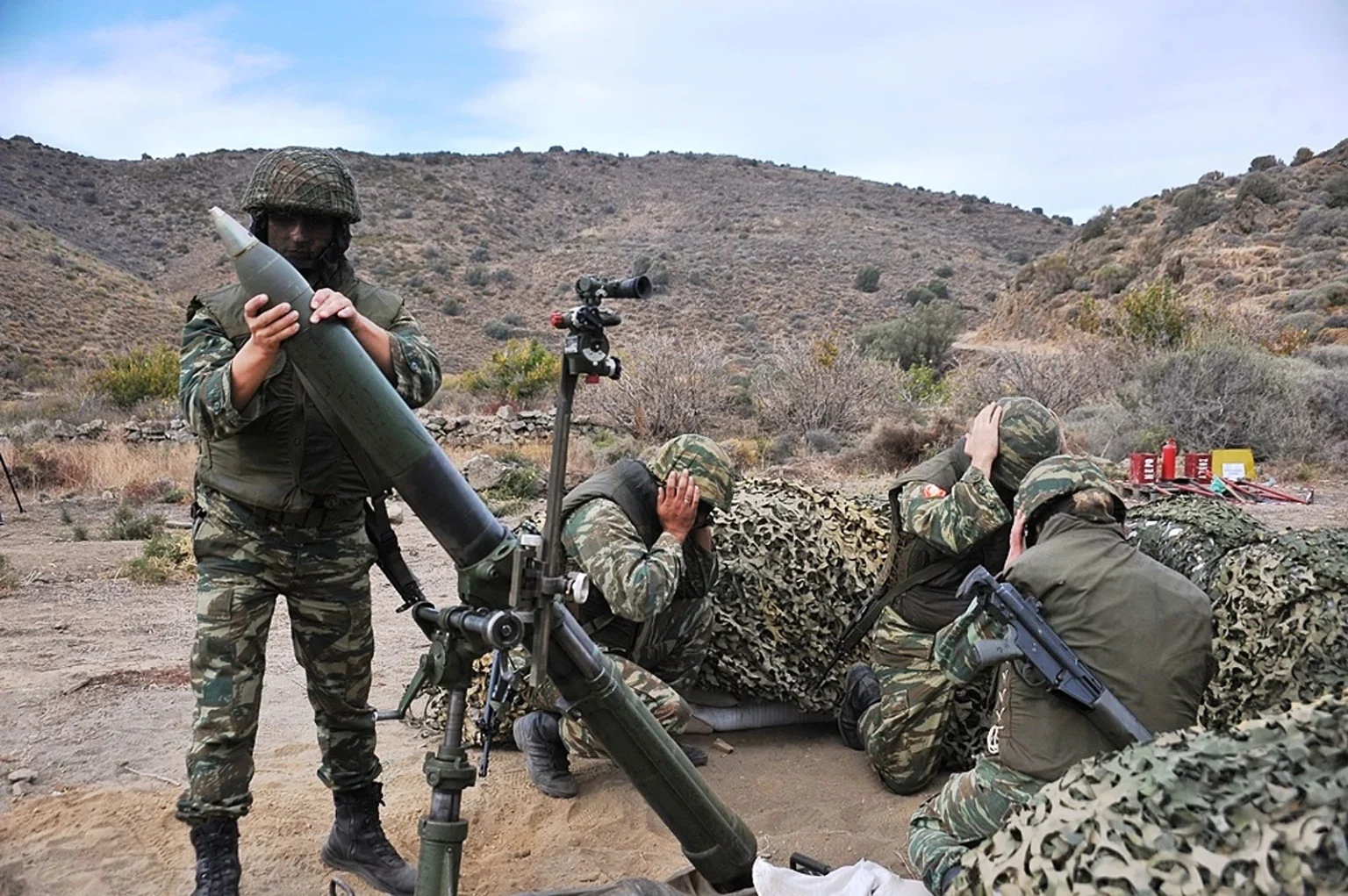







Eighty-six years ago today, on 15 August 1940, the feast of the Dormition of the Virgin Mary, the Italian submarine Delfino torpedoed and sank the Greek cruiser Elli in Tinos harbour.
In the second year of the Second World War, Italy, an Axis power, was seeking to challenge Britain’s dominance in the Mediterranean. After expansion into Libya, Ethiopia and Albania, dictator Benito Mussolini had turned his attention towards Greece.
At the same time, substantial Italian forces moved towards Greece’s borders, revealing Mussolini’s intentions. He also chose to launch small-scale attacks on Greek ports and ships. At 06:30 on 12 July, three Italian bombers attacked the Greek navy’s lighthouse supply vessel Orion with bombs and machine-gun fire while it was supplying the Gramvousa lighthouse in Kissamos Bay, western Crete.
The same aircraft then attacked the destroyer Hydra, which had been ordered to help Orion. At 06:50 on 30 July, an Italian aircraft flying from the Dodecanese dropped four bombs on the Greek destroyers Vasilefs Georgios and Vasilissa Olga and two Greek submarines in Nafpaktos harbour.
Chemical analysis of fragments indicated that the bombs were of the same type as those used against Hydra on 12 July 1940.

The order and the torpedo attack
The order to torpedo Elli was given by the Italian governor of the Dodecanese, Cesare Maria De Vecchi. On the night of 14 August, Delfino, commanded by Lieutenant Giuseppe Aicardi, left the naval base at Partheni on Leros. Its mission was to attack ships at Tinos and Syros before proceeding to blockade the Corinth Canal.
In the early hours of 15 August 1940, the submarine lay submerged outside Tinos harbour. Through the periscope, Aicardi saw a Greek warship arriving. Elli was approaching the island for the religious celebrations.
At 08:25, only minutes before the procession of the Virgin Mary’s icon, crowds had gathered along the waterfront. Delfino fired three torpedoes. One struck Elli, while the other two exploded at the quay. The hit was devastating, striking the engine room and fuel tanks. The cruiser sank a little over an hour later.
One petty officer and eight sailors aboard Elli were killed, while 24 people on the cruiser were injured. One of the torpedoes that exploded at the quay also caused a woman on the waterfront to suffer a fatal heart attack.
Delfino withdrew without being identified. A few hours later it arrived at Syros but left without attacking because it found no Greek ships in the harbour. Italian authorities then ordered it to return urgently to Leros, abandoning its mission at the Corinth Canal.
Rome’s political authorities may not have known of the operation, although Mussolini himself may have been informed. Italy’s foreign minister at the time, Galeazzo Ciano, later wrote in his memoirs that the sinking was the result of De Vecchi’s recklessness.

The cruiser Elli
Elli served in the Greek navy and was named after the Battle of Elli during the First Balkan War. Cruisers were fast warships of varying sizes, generally more lightly armed than battleships, whose role they gradually displaced.
On 15 August, Elli, displacing 2,115 tonnes and carrying a crew of 232, was in Tinos Bay when the surprise torpedo attack struck. It sank at 09:45 that morning.
The aftermath
Prime Minister Ioannis Metaxas ordered that the religious procession should go ahead despite the cruiser’s sinking, to sustain national morale and religious faith. It duly took place with a large and solemn attendance.
The attack plunged Greece into mourning. National pride and dignity had been deeply wounded, while anger towards Italy was intensified by the decision to strike on one of Christianity’s major feast days.
The torpedoing received extensive international press coverage, with even German newspapers expressing sympathy for Greece. Against that background, the Italian government tried to blame Britain, claiming it had sought to stir unrest in the Balkans and damage relations between Greece and Italy.