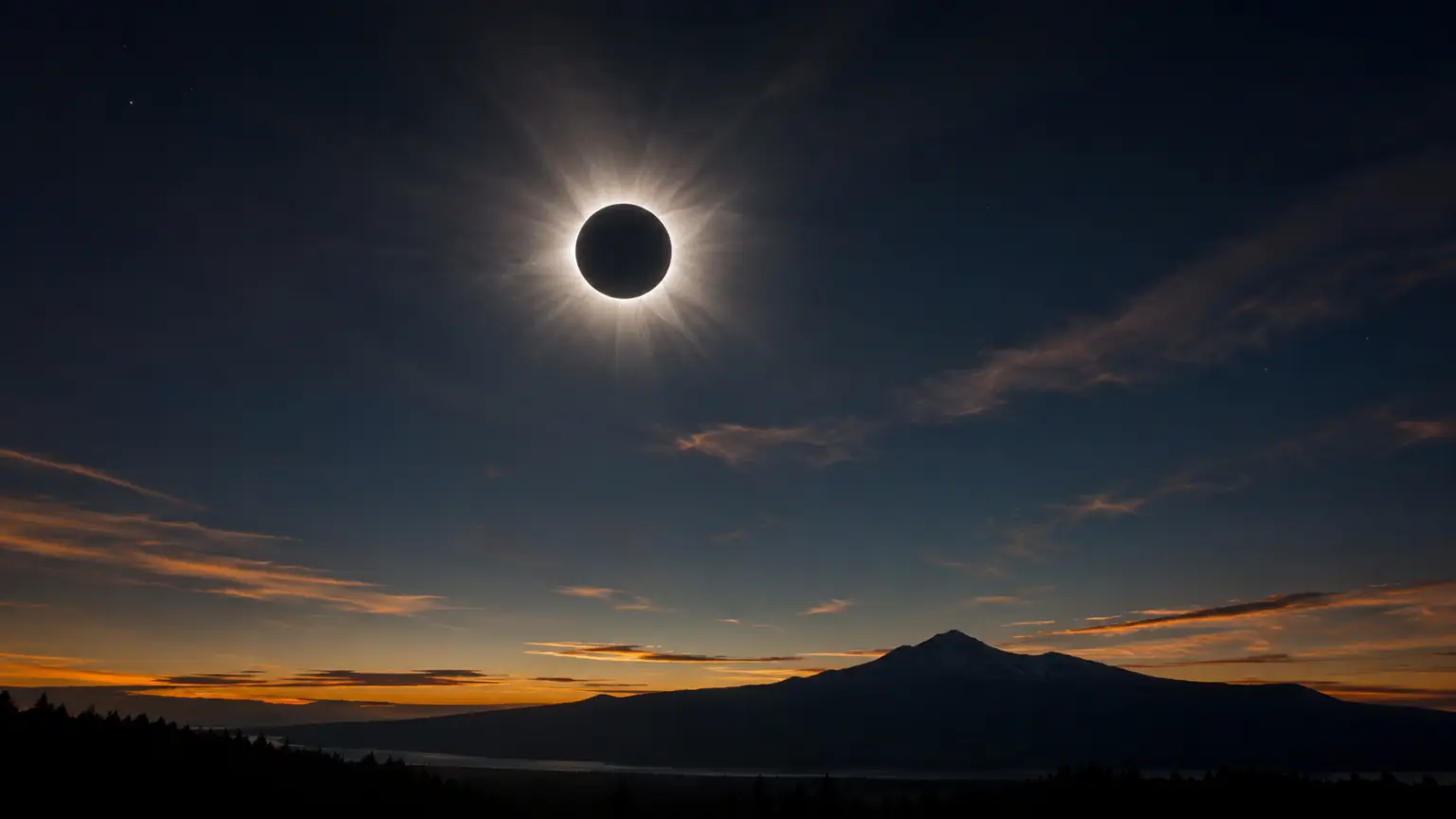










A total solar eclipse will take place on 12 August 2026, one of the year’s most striking astronomical events.
Millions of people are expected to look skywards as the Moon’s shadow crosses Greenland, Iceland and Spain, turning day into night for a few minutes for those within the path of totality.
For European astronomy enthusiasts, it is a particularly significant event, described in the original report as Europe’s first visible total solar eclipse since 1999.
Where will the total solar eclipse be visible?
The eclipse will be visible in Greenland, Iceland and northern Spain, with the maximum duration of totality reaching two minutes and 18 seconds.
Spain is expected to be the most popular destination because of its generally favourable August weather. There is one important consideration, however: during totality, the Sun will be very low above the western horizon, so observers will need an unobstructed view to the west.
Examples of locations within the path of totality
- Scoresby Sund, Greenland
Duration of totality: 1 minute 46 seconds
Time: 16:35 local time
Sun’s altitude: 24° above the western horizon
- Reykjavík, Iceland
Duration: 1 minute 1 second
Time: 17:48
Sun’s altitude: 25°
- Snæfellsjökull National Park, Iceland
Duration: 2 minutes 10 seconds
Time: 17:45
Sun’s altitude: 25°
- Gijón, Spain
Duration: 1 minute 46 seconds
Time: 20:26
Sun’s altitude: 10°
- A Coruña, Spain
Duration: 1 minute 15 seconds
Time: 20:27
Sun’s altitude: 12°
- Palencia, Spain
Duration: 1 minute 42 seconds
Time: 20:29
Sun’s altitude: 9°
- Burgos, Spain
Duration: 1 minute 44 seconds
Time: 20:28
Sun’s altitude: 8°
- Segovia, Spain
Duration: 54 seconds
Time: 20:31
Sun’s altitude: 8°
- Sigüenza, Spain
Duration: 1 minute 38 seconds
Time: 20:30
Sun’s altitude: 7°
- Mallorca, Spain
Duration: 1 minute 36 seconds
Time: 20:31
Sun’s altitude: just 2.7°