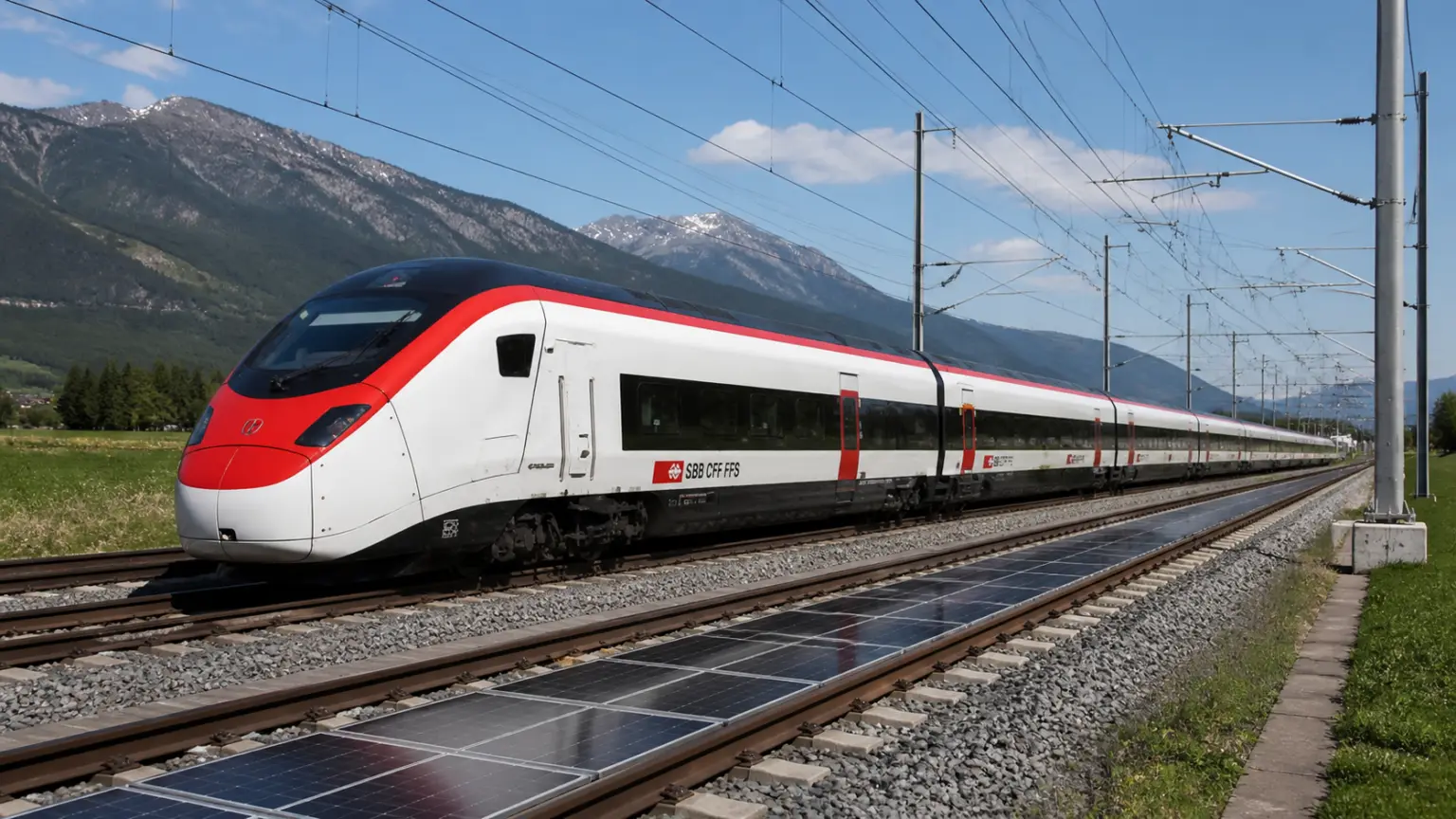










A seemingly simple but innovative idea from Switzerland is seeking to rethink the way we produce energy. Start-up Sun-Ways is using the unused space between railway rails, installing solar panels that roll out like a carpet and turn the railway network into a source of clean electricity.
Sun-Ways’ technology allows removable solar panels to be installed directly between the tracks without requiring new land or permanent structures. The system can be taken out easily for maintenance or engineering works, while the electricity generated is fed into the grid.
Energy without taking more land
At a time when the energy transition faces opposition over the land occupied by wind turbines and large solar farms, such solutions are particularly relevant. They require no additional land, leave the surrounding landscape unchanged and avoid competing with uses such as farming or biodiversity protection.
The approach forms part of a wider search for less visible energy infrastructure. From solar panels on roofs and roads to technologies integrated into urban networks, the common aim is to generate power without an additional environmental footprint. Railways offer a particular advantage because their networks extend across entire countries.
Potential and challenges
If the model is expanded, its potential is considerable. Countries with extensive rail networks have enormous areas that could be used. In the United States, for example, a deployment could potentially produce enough electricity for millions of households without occupying an extra square metre of land.
Implementation nevertheless faces challenges. Resistance to vibration, railway safety, performance in shade and maintenance requirements are all critical factors. The system’s removable, flexible design, however, gives it an advantage over more permanent infrastructure.
The thinking behind the innovation
What distinguishes Sun-Ways’ idea is not just its technology but its underlying approach. As energy demand grows and environmental constraints tighten, solutions cannot rely exclusively on large investments. Innovation is also needed to make use of what already exists, turning empty space into something valuable.
Switzerland, with its long engineering and infrastructure tradition, appears to be pointing towards one such route. If the project succeeds, trains may one day run above an almost invisible network generating clean power without claiming more space from nature.
Perhaps the energy transition’s greatest challenge is not simply producing more power, but doing so in a way that leaves more room for the world around us.