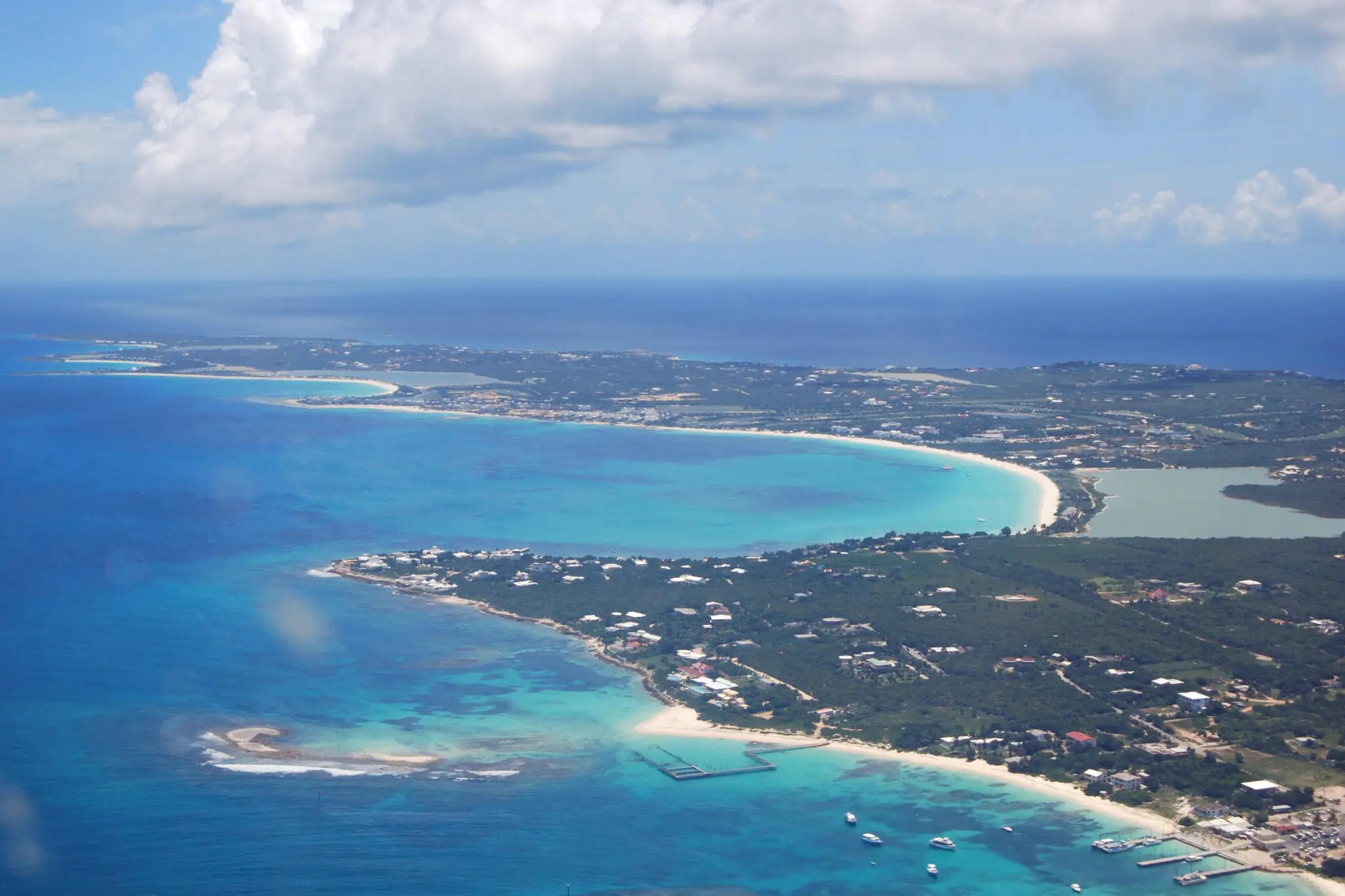











Some places do not produce technology but know how to use it to strengthen their public finances. Anguilla is a striking example: a small Caribbean island of around 16,000 people, without a large industrial base, technology universities or a start-up sector, that has benefited from the global artificial intelligence boom. Its unexpected advantage is two letters: .ai.
The story began long before artificial intelligence became one of the world economy’s hottest sectors. During the internet’s early development in the 1990s, countries and territories received domain suffixes identifying their online presence. Anguilla was assigned .ai as an abbreviation of its name. For years, its financial value was modest. In 2020, there were only around 40,000 registrations, generating roughly $6 million to $7 million annually.
Then came ChatGPT
After AI’s breakthrough in 2022, start-ups, companies and projects wanted web addresses that signalled artificial intelligence. Anguilla began collecting the proceeds. Registrations rose from around 100,000 in 2021 to more than one million in early 2026. A domain costs approximately $140 a year, with renewal rates near 90%, creating recurring income. Revenue reached around $32 million in 2023, $39 million in 2024 and $85 million in 2025. Based on activity in the first quarter of 2026, the original report projected that annual receipts could exceed $120 million.
For a territory with a total budget a little above $300 million, such income has become a leading economic asset. Depending on the year and estimate, .ai contributes between 20% and almost half of government revenue. In effect, Anguilla is one of the few places able to derive a public income stream indirectly from the AI boom.
It may look like pure luck, but Anguillians can also point to their determination to retain a separate identity under Britain rather than become part of another independent state. They defended that choice at a time when neighbouring islands were seeking independence and United Nations membership.
A long struggle for separate status
The island’s small size and population led British administrators to attach it to larger, more populous neighbours. For decades, Anguilla was administered with St Kitts and Nevis, a union many Anguillians rejected. When Britain granted associated statehood to St Kitts–Nevis–Anguilla in 1967, the Anguilla Revolution followed. Residents expelled the St Kitts authorities and sought a return to British administration rather than independence within that union.
The choice seemed unusual at the time. Anguilla secured separate dependent-territory status in December 1980, while St Kitts and Nevis became independent in September 1983. That insistence on a separate future proved economically significant, although nobody could have foreseen the AI boom. Political stability, the British legal framework and international credibility helped provide a basis for the domain business. Anguilla works with major international registrars and retains a high share of registration proceeds, reported at around 90%.
Its economy was not always digital. For decades it relied heavily on tourism: white-sand beaches, luxury resorts and affluent visitors formed its principal growth engine. Tourism still accounts for around 37% of economic activity or public receipts in the measurements cited by the original report.
The .ai proceeds are being put to use. With British support, the local government has directed a substantial share towards infrastructure, airport improvements, roads and social provision, including healthcare and education. Anguilla offers a case study in how geopolitical circumstance, institutional stability and a technological moment can combine to create wealth.