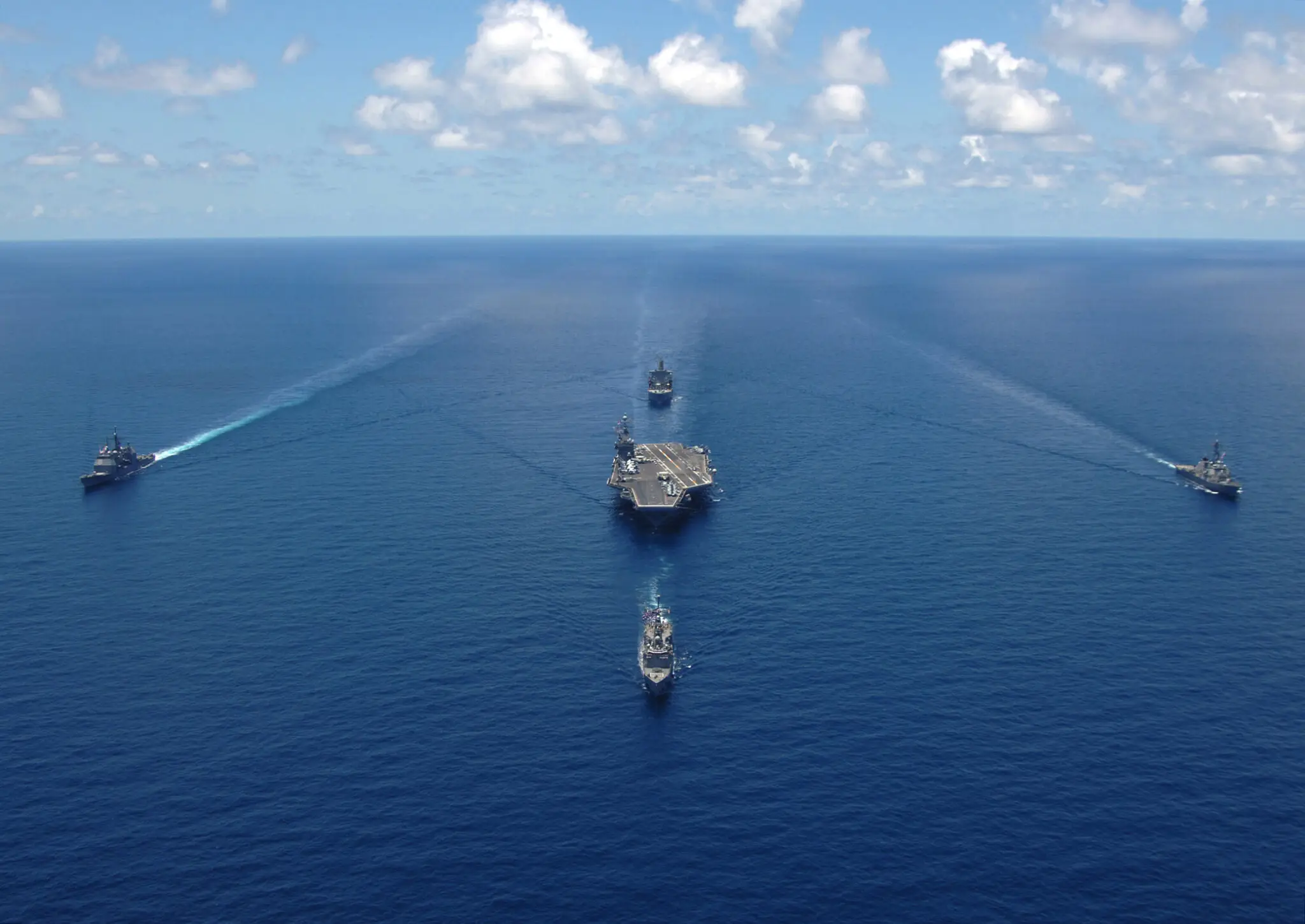







US forces will begin a naval blockade of Iranian ports at 5pm Greek time on 13 April, according to US Central Command, after talks to end the Middle East war collapsed.
The decision, reportedly ordered by Donald Trump, increases pressure on Tehran and raises concern about further international energy-price rises.
CENTCOM said the blockade would begin at 10am US Eastern Time and apply to ships of every nationality entering or leaving Iranian ports and coastal areas.
CENTCOM's announcement
“US Central Command forces will begin implementing a blockade of all maritime traffic entering and exiting Iranian ports at 10am Eastern Time on 13 April, in accordance with the President's proclamation.
“The blockade will be enforced impartially against vessels of all nations entering or departing Iranian ports and coastal areas, including all Iranian ports on the Arabian Gulf and Gulf of Oman.”
CENTCOM specified that US forces would not impede freedom of navigation for ships passing through the Strait of Hormuz to and from non-Iranian ports.
Further guidance for commercial shipping would be issued through official notices before the measure began.
Mariners were told to monitor Notices to Mariners and contact US naval forces on bridge-to-bridge Channel 16 when operating in the Gulf of Oman and the approaches to Hormuz.
Trump's order
After US–Iran negotiations in Islamabad failed, Trump said he had instructed the US Navy to begin blocking vessels attempting to enter or leave the Strait of Hormuz.
“Effective immediately, the United States Navy, the finest in the world, will begin the process of blockading any and all ships trying to enter or leave the Strait of Hormuz,” he wrote on Truth Social.
The announcement followed Iran's restrictions on tanker movements through the strategic passage.
Oil flows and prices
Disruption in Hormuz has affected countries dependent on Middle Eastern oil and increased prices internationally, including in the United States.
CNN's analysis says the strait has not been completely closed: Iran has allowed some tankers through gradually, charging fees reported to reach $2 million per vessel.
Iranian oil shipments have also continued throughout the conflict.
According to data company Kpler, Iran exported an average of 1.85 million barrels of crude daily through March, around 100,000 more per day than in the preceding quarter.
Interrupting that flow could deprive Tehran's government and military operations of an important source of finance.
Risk of another price surge
Until recently, Washington had appeared cautious about a complete interruption of oil traffic because of the potential for a substantial global price increase.
The United States has sanctioned Iranian oil for decades. Trump's administration restricted crude exports after leaving the nuclear agreement in 2018.
Some restrictions were eased the previous month, releasing around 140 million barrels. The report cites US Energy Information Administration figures indicating that this would cover roughly a day and a half of total global demand.
Washington is seeking to use every available means to restrict Tehran's finances while limiting energy prices.
That effort has included a coordinated international release of strategic oil stocks and eased restrictions on hundreds of millions of barrels of Russian oil.
Increasing pressure on Iran could nevertheless push oil and gas prices higher as Washington seeks greater leverage to end the war.