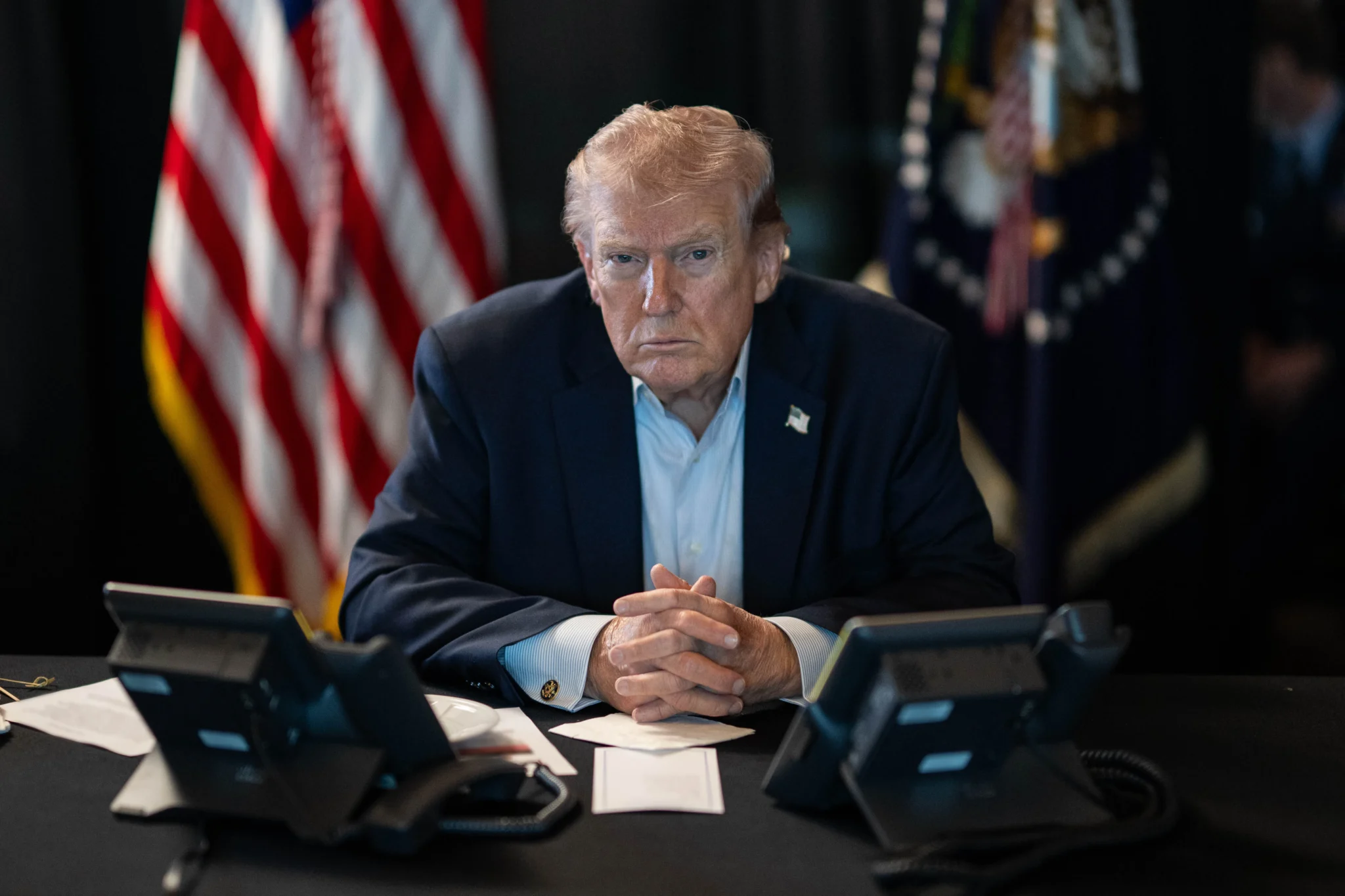






Donald Trump announced plans to raise tariffs on cars and trucks from the European Union to 25%, sharply escalating tension with Brussels.
The US President did not specify the legal authority he would use to impose the new charges.
“Based on the fact that the European Union is not complying with our fully agreed trade deal, next week I will be increasing the tariff charged to the European Union for cars and trucks coming into the United States,” he wrote on Truth Social on Friday.
“The tariff will be increased to 25%. It is fully understood and agreed that, if they produce cars and trucks in US plants, there will be no tariff.”
How the dispute developed
The United States had reduced EU car tariffs to 15% under an agreement between the two sides.
US officials nevertheless complained that the EU was moving too slowly to implement it.
In February, the Supreme Court limited the President's use of tariffs, finding that he had exceeded his authority under emergency legislation.
The European car duties, however, were imposed under separate national-security powers in Section 232 and were not affected by that ruling.
Risks for European manufacturers
Higher car tariffs could severely damage European companies, placing them at a disadvantage in the US market against manufacturers from Japan, South Korea and Mexico.
Mercedes, BMW and Volkswagen are particularly exposed because they import a large proportion of their US sales from European factories.
“The EU is implementing its commitments under the joint statement in line with established legislative practice,” Commission spokesman Olof Gill said.
If Washington breached the agreement, he added, the EU would keep its options open to protect its interests.
The New York Times reported that, although the EU had recently moved the agreement through an important European Parliament stage, final negotiations were still needed before implementation.
Trump's proposed duties could derail that fragile process.
Fears of a serious trade war
“If we take Trump's Truth Social post at face value, it means the deal is not going to hold,” said Mujtaba Rahman, Eurasia Group's managing director for Europe.
“That would be a clear violation of the understanding reached by the two sides and suggests we risk a very serious trade war from next week.”
He noted that the EU already had counter-tariff options prepared.
Scotch whisky and the King
Trump also announced on Thursday, after meeting King Charles III, that he would remove US tariffs on Scotch whisky.
He appeared to be referring to a 10% duty imposed in February under Section 122 of the Trade Act of 1974, covering balance-of-payments issues.
Georgetown trade expert Peter Harrell commented:
“I did not have tariff reductions as a gift to the King on my list. The whisky exemption is probably legal, assuming the entire Section 122 regime is legal.”
Turnberry and Europe's strategic dependence
For the EU's 27 members, which no longer include the United Kingdom, the broader developments are less favourable.
The agreement reached by Trump and Ursula von der Leyen at Turnberry in Scotland in July has been criticised in Europe as unequal.
It gives US exporters low-tariff access to European consumers, while many European exports face 15% duties in the United States.
European officials acknowledged balancing geopolitical considerations, particularly the wish to keep Washington engaged in supporting Ukraine.
Europe's military dependence on the United States, both through NATO and for critical technologies, complicates its response to trade pressure.
Concerns about the agreement have slowed ratification, alongside wider international tensions.
MEPs suspended work when Trump threatened to take Greenland, an autonomous part of EU member Denmark.
They paused again after the Supreme Court rejected his broad tariffs, while the administration's response remained unclear.
Washington has also threatened Europe for months over digital rules that impose costs on major US technology companies.
Recently, however, talks on final implementation had been progressing, with proposed amendments.
The European Parliament's version included a clause cancelling the agreement if Trump's administration broke its promises and imposed new EU tariffs.
Strained relations with Germany
The tariff announcement came just as transatlantic trade relations had appeared temporarily steadier.
The previous week, the United States and Europe announced a critical-minerals agreement as both sought more secure supply chains.
Tensions nevertheless persisted.
Trump pressed European states to assist in the Iran war, including reopening Hormuz, but they resisted.
Relations with Germany, a major global car producer, also deteriorated.
Trump said he was studying and reviewing a possible reduction of troops in Germany, apparently responding to Chancellor Friedrich Merz's comment that Iran had humiliated the United States.
“The question now is how Europe responds,” Harrell said.
“Will Europe offer an exit, such as speeding up implementation of the trade agreement, or retaliate, in which case the situation could escalate further on both sides?”