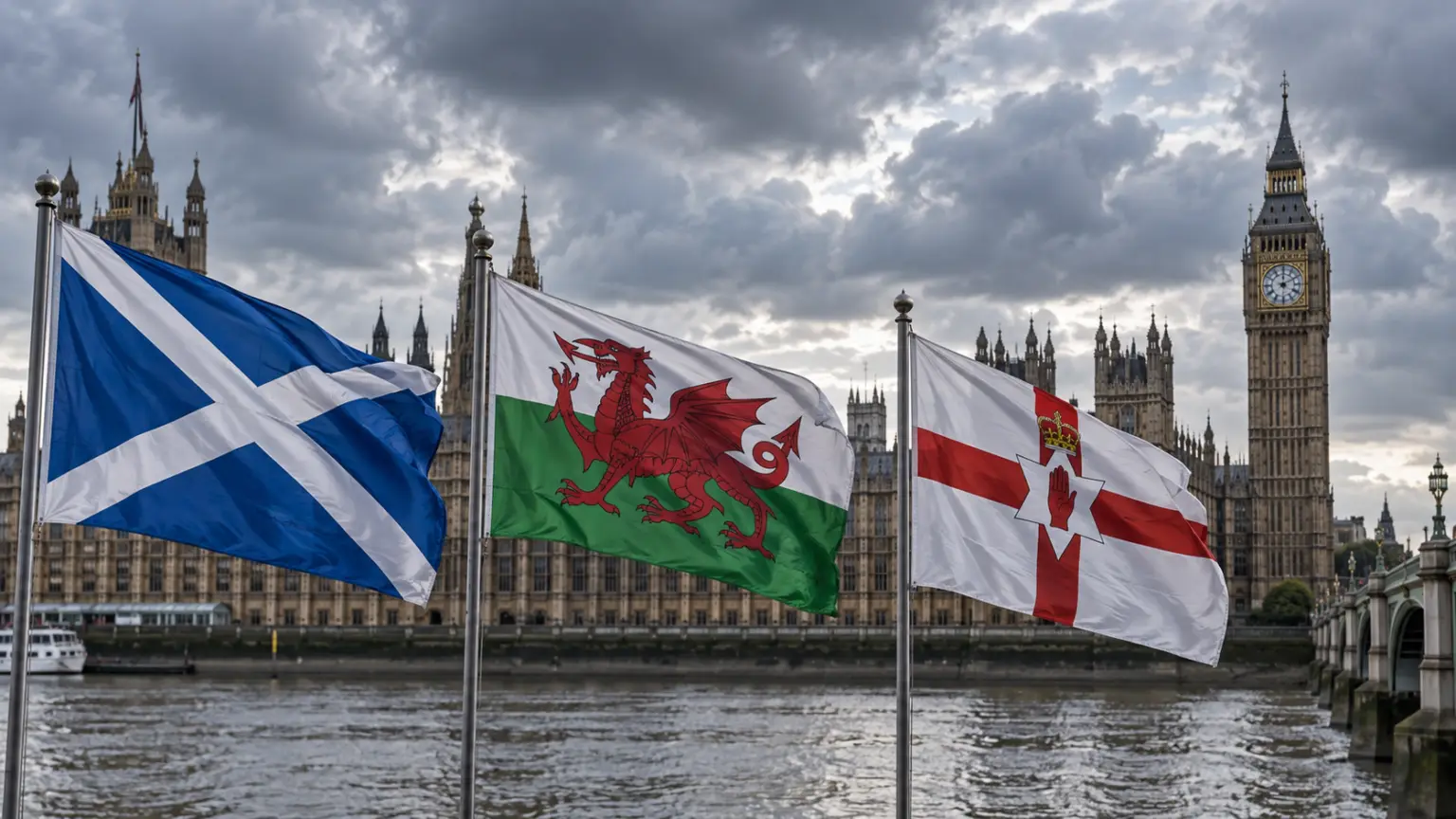







Nationalist leaders from Scotland, Wales and Northern Ireland have signed a cooperation memorandum supporting the three nations' right to decide their futures democratically.
The Cardiff meeting brought together Scottish First Minister and SNP leader John Swinney, Welsh First Minister and Plaid Cymru leader Rhun ap Iorwerth, Northern Ireland First Minister Michelle O'Neill and Sinn Fein President Mary Lou McDonald.
According to British reporting, they urged the UK Government not to obstruct referendums where a clear democratic mandate existed.
They also agreed to cooperate more closely on the economy, energy, social policy and relations with Europe.
Different constitutional goals
Swinney argued that no Westminster government should be able to block Scotland's democratic wishes indefinitely.
Ap Iorwerth said Wales was a nation, not simply a region of England, seeking greater powers and the right for Welsh people to decide their constitutional future.
O'Neill renewed calls for an Irish reunification referendum, arguing that partition had failed and London should prepare for possible constitutional change.
The parties pursue different outcomes: the SNP seeks an independent Scotland, Plaid Cymru an independent Wales, and Sinn Fein the unification of Northern Ireland with the Republic of Ireland.
Symbolic significance and limits
The initiative is significant because, for the first time, all three devolved administrations are led by politicians from parties supporting independence or Irish reunification.
It is therefore a substantial political and symbolic challenge to London.
It does not, however, mean the United Kingdom's dissolution has been decided or that referendums are automatically being called.
The memorandum is a joint political declaration by the participating nationalist leaders, not a binding constitutional act.
In Northern Ireland, deputy First Minister Emma Little-Pengelly disputed O'Neill's authority to sign for the entire Executive, where power is shared between nationalists and unionists.
Legal obstacles
Scotland's Parliament cannot unilaterally authorise a new independence referendum.
In 2022, the UK Supreme Court unanimously ruled that the question fell within matters reserved to Westminster.
A lawful referendum therefore requires UK Government agreement or a change to the legal framework.
Northern Ireland has a different mechanism.
Under the Good Friday Agreement, the relevant UK Secretary of State can call a reunification referendum when it appears likely that a majority would support a change in constitutional status.
Wales has no equivalent agreed departure mechanism. A binding referendum would likewise require political agreement and Westminster legislation.
Trump's comments on Irish unity
The meeting came as Irish reunification attracted renewed international attention.
During a visit to Ireland, Trump openly said he would like to see the island reunited.
His remarks prompted objections from Northern Irish unionists and irritation in London, since US administrations traditionally avoid taking a clear position on the region's constitutional future.
A coordinated political challenge
The United Kingdom is not facing immediate dissolution.
The UK Government retains control of the main constitutional mechanisms, and support for independence or reunification differs significantly across the three areas.
Nevertheless, the joint appearance of leaders challenging the existing model carries political weight.
Scottish and Welsh independence movements and Irish reunification advocates are seeking to coordinate their approaches to Westminster.
Their demands have moved from separate national campaigns towards shared political pressure.
Even without early referendums, the initiative represents a significant development in British politics.