


The South Aegean Regional Council has set out its position on the draft Special Spatial Framework for Tourism and the accompanying Strategic Environmental Impact Assessment, submitting detailed proposals for planning that reflects the islands' actual needs and distinctive characteristics.
Its stated position supports planning that also serves the nationally accepted goals of addressing demographic challenges and promoting development with social wellbeing.
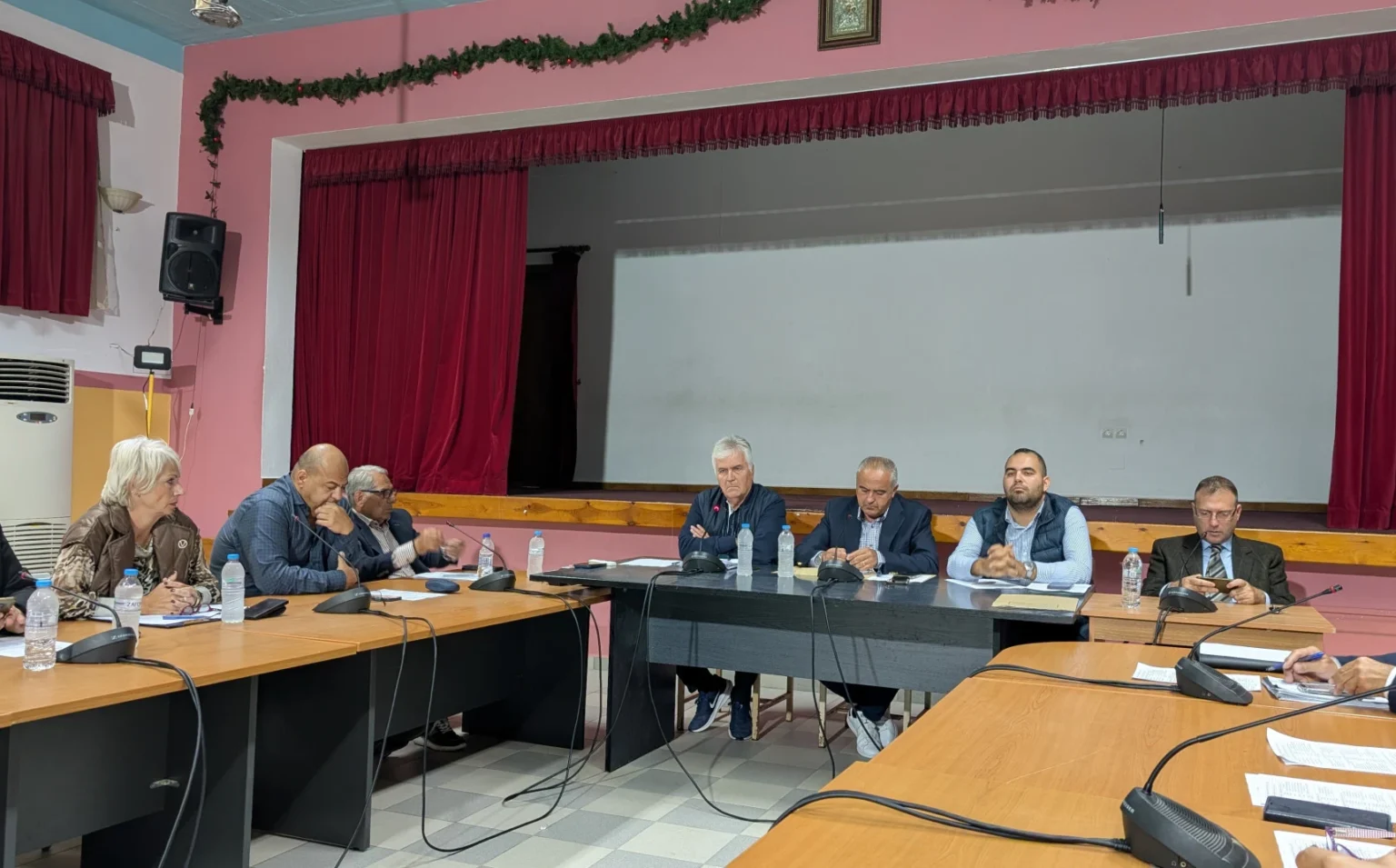
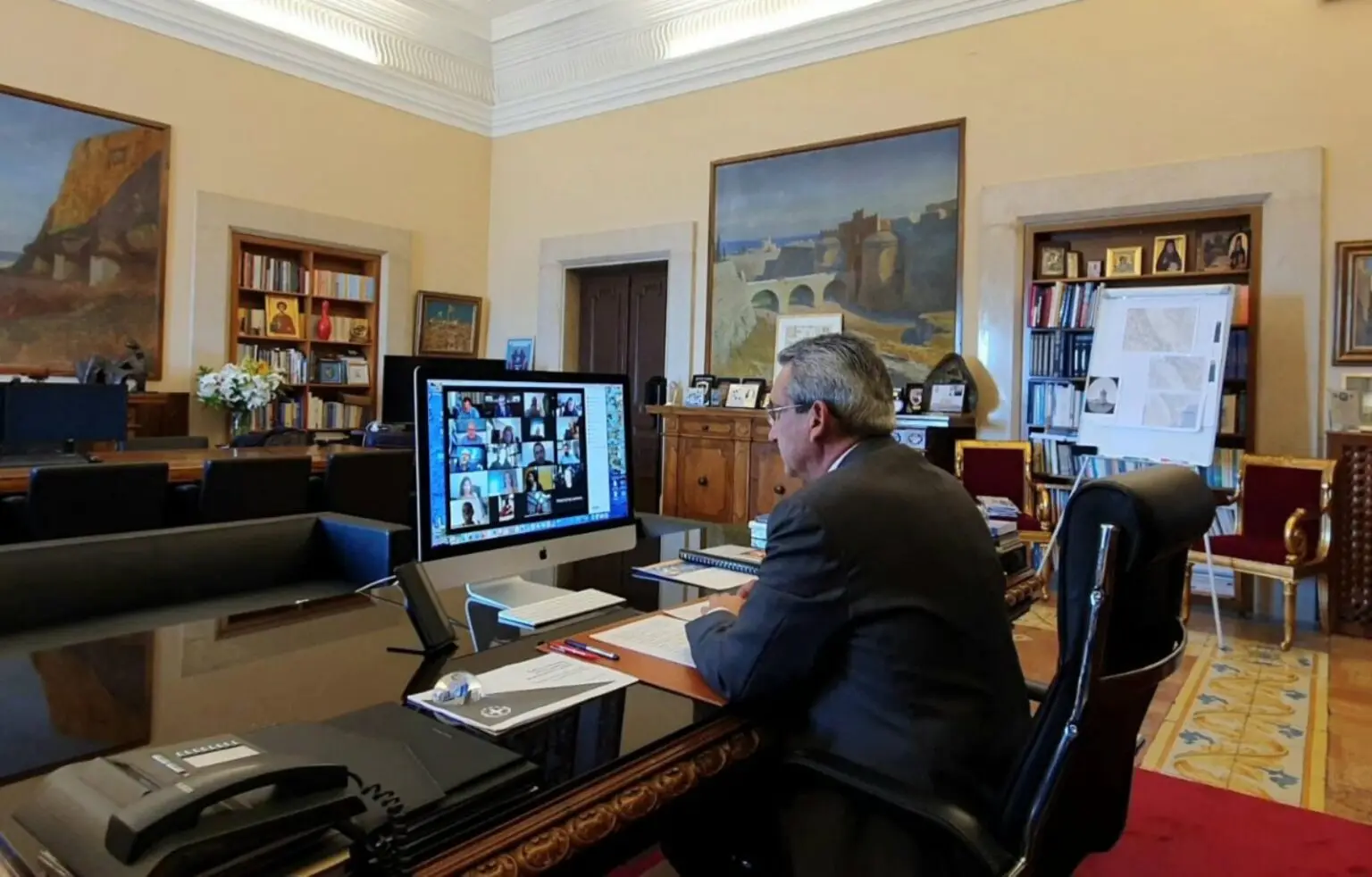
The meeting took place by Zoom on Thursday 21 May. Tourism and business representatives who participated and spoke included Hellenic Chamber of Hotels President Alexandros Vassilikos; Theofilos Kyratsoulis, representing the Hellenic Hoteliers Federation; Dodecanese Chamber President Giannis Pappou; Cyclades Chamber President Giannis Roussos; Kos Hoteliers' Association President Mary Triantafyllopoulou; and Rhodes Commercial Association President Kostas Spanos. Tinos Mayor Panagiotis Krontiras also took part.
After detailed discussion, the council adopted the following positions and proposals by majority vote.
Modern planning adapted to each island
The Region recognises the need for a modern, sustainable, legally robust and scientifically supported tourism spatial framework. It argues, however, that this should provide guidance to be developed through Local and Special Urban Plans, rather than act as an unexpected and excessively restrictive regulatory mechanism.
The council's central position is that uniform numerical bed limits, particularly thresholds of 100 and 350 beds, cannot alone constitute absolute criteria for accepting or excluding tourism investment.
If retained, those limits should have an advisory and transitional role until first-level urban planning is completed and each island or smaller spatial unit has been assessed on a scientifically supported basis.
Sustainable tourism development cannot be judged solely by bed numbers, the council says. Assessment must also consider the water balance, solid-waste management, energy sufficiency, transport, accessibility, climate adaptation, social cohesion, population trends, and the needs of permanent residents and workers.
Carrying capacity as a dynamic measure
The decision places particular emphasis on carrying capacity. This should not be treated as a static administrative obstacle or a simple numerical restriction, but as a dynamic planning tool subject to reassessment and linked to real data, critical infrastructure, environmental indicators and investment quality.
The council therefore seeks annual monitoring of carrying capacity and the option to reassess an area's classification.
An area that invests in infrastructure, retires old beds, reduces its environmental footprint and improves its tourism offering should be eligible for reassessment.
The council also calls for an explicit link between the siting of new tourism accommodation and the adequacy of critical infrastructure.
Social and affordable housing
A separate part of the decision addresses social and affordable housing.
Difficulty finding accommodation for tourism workers, teachers, medical staff, public officials and new residents is identified as a critical issue for the islands' demographic and social sustainability.
The council seeks a dedicated social housing chapter within the tourism spatial framework, with strong spatial incentives serving people and local communities' needs.
“The South Aegean Region is not opposed to planning; it is opposed to planning that is imposed without warning and lacks adequate scientific justification,” the decision states.
As Greece's predominantly island region, where tourism is essential to economic, social and demographic sustainability, the South Aegean should be treated as an institutional partner in shaping the rules, rather than simply receiving uniform regulations.
The council's requests
The council calls for quantitative bed limits to have a guiding, transitional role until Local or Special Urban Plans are approved or the relevant carrying-capacity assessment reports are completed.
It seeks an explicit connection between tourism development and sufficient critical infrastructure, alongside a standing mechanism for reassessing carrying capacity rather than treating it as a fixed ceiling.
A dedicated chapter on social and affordable housing should be included as an essential condition for socially sustainable tourism development.
The council rejects any proposal for a new environmental levy. It instead calls for revenue already collected locally through the Climate Resilience Levy to finance the modern infrastructure the islands need.
It also seeks institutional participation by the South Aegean Region and its Carrying Capacity Directorate in monitoring, evaluation and reclassification of areas.
Finally, it proposes making the South Aegean a pilot region for sustainable tourism, drawing on experience from initiatives already completed or under way: The Rhodes Co-Lab on Rhodes, AstyMove on Astypalaia, Gr-Eco Islands on Halki and Tilos–Just Go Zero on Tilos.
The council's aim is a framework that protects the islands from unplanned development, strengthens community resilience, directs tourism towards high-quality, green and spatially justified development, and supports the islands' demographic prospects.
The Region says it will help shape a framework serving sustainable development, social wellbeing and national responsibility towards island communities. It should support growth in permanent populations while addressing the shared national goals of demographic renewal and development with social wellbeing.