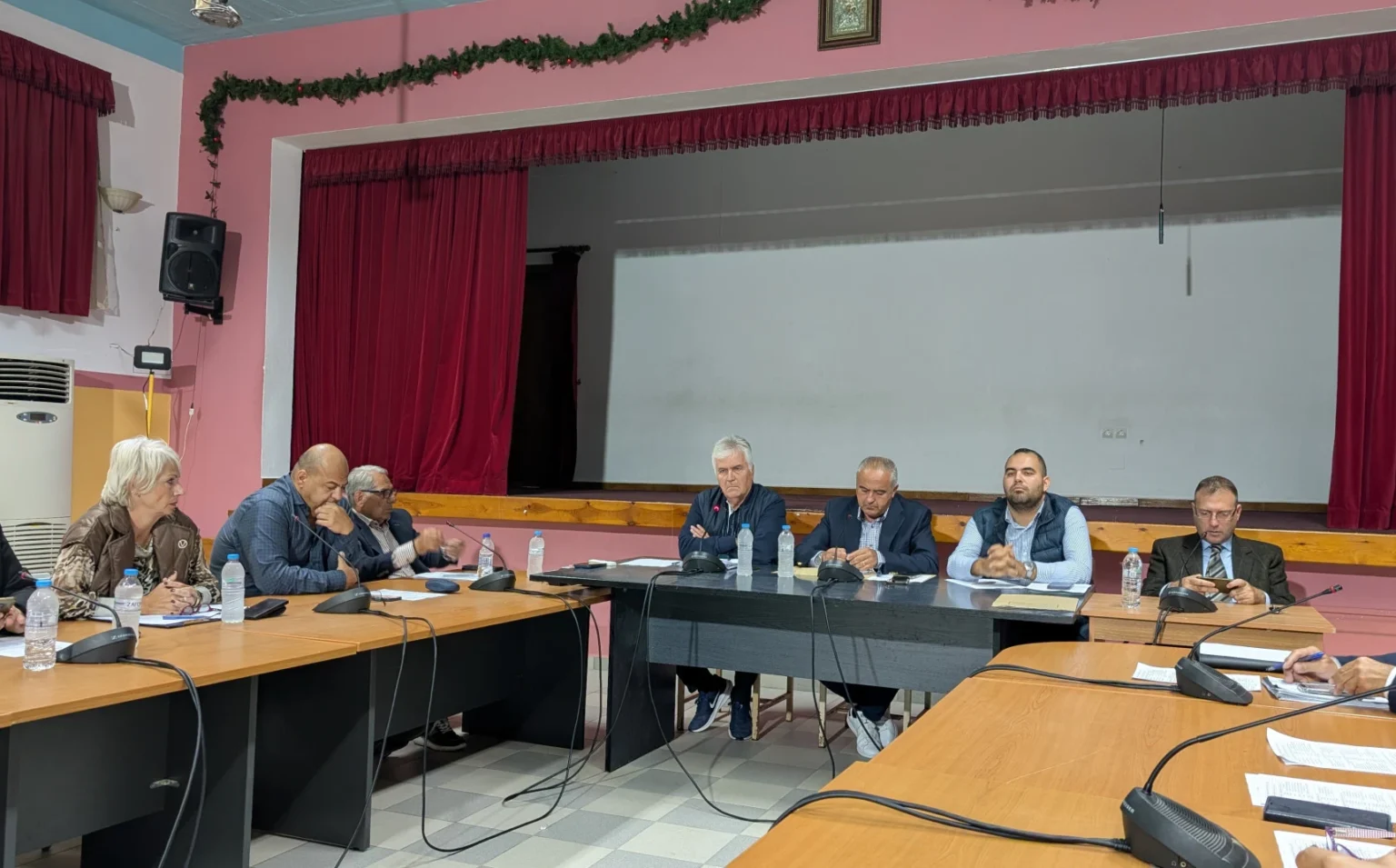


A Participatory Processes Workshop took place in the Regional Council Chamber in Rhodes last week as part of the European A-AAGORA project, Atlantic and Arctic Agora.
As an associated region, the South Aegean Region is implementing actions fully aligned with the European mission “Restore our Ocean and Waters by 2030”.
Led by Portugal's University of Aveiro, A-AAGORA is among the first European projects to make use of regions' capacity to deliver targeted action to protect oceans and marine ecosystems.
The South Aegean's involvement centres on exchanging knowledge and good practice with European partners in Ireland, Portugal and Norway, with the aim of strengthening sustainable approaches to marine-resource management.
Mara Antoniadi, Regional Councillor responsible for European Programmes and chair of Energeiaki SA, opened the workshop and welcomed participants. She stressed A-AAGORA's importance for protecting marine ecosystems and the South Aegean Region's contribution to sustainable marine development.
A pilot area in western Rhodes
The first part presented trial solutions applied in northern European countries and considered whether they could work in the South Aegean. It also reviewed current conditions in the study area: the waters off western Rhodes and nearby islets, including Strongyli and Makri.
Selection of the pilot action is linked to cooperation with Blutopia, represented by marine biologists Savvas Chatzinikolaou and Tasos Baltadakis.
The lead project partner selected Blutopia as a key collaborator. The company has received European recognition for developing multiple-use marine solutions that combine tourism with sustainable aquaculture.
Those contributing to the strategy included Deputy Regional Governor for the Primary Sector Filimon Zannetidis; Giorgos Kondylatos of the Hellenic Centre for Marine Research; Marika Deligianni of the Port Fund; Port Authority representatives; invited expert Stella Kyvelou, a Panteion University professor and EU maritime spatial planning expert; Ms Papaki, a councillor from Kritinia Community; Evita Chrysochoidi of the Hoteliers' Association; and representatives of fishermen and tourist vessels operating on the island's western coast.
Pressures, opportunities and proposed solutions
The second part, coordinated by Eirini Barianaki of Energeiaki SA, used a participatory approach to map existing uses of the marine area and discuss pressures and challenges affecting the harbour at Kamiros.
Participants also identified the area's development potential and drafted proposals for a realistic, workable framework for the regional operational plan and sustainable marine governance.
Discussion covered coastal erosion and protection of the marine environment, with particular attention to Posidonia oceanica seagrass meadows.
An analysis examined the strengths, weaknesses, opportunities and threats of trial solutions used in northern countries and their potential adaptation to local conditions.
The options selected for discussion included installing camera-monitoring systems to record coastal erosion daily and build time-series data; using ecological mooring buoys to protect Posidonia meadows from uncontrolled anchoring; and promoting ocean literacy.
The Region is already working with Blutopia on ocean-literacy programmes in 13 Rhodes schools, where more than 300 pupils have learnt about marine protection and the blue economy.
Links to wider European action
The Region's activities are fully aligned with the European mission “Restore our Ocean and Waters by 2030”. Its contribution received international recognition at the Our Ocean 2024 conference in Athens, where the South Aegean Regional Governor was presented with the Mission Ocean flag.
The Region is also continuing its involvement in the strategic LIFE SIP GR Blue project. With a total budget of €15 million, that project supports implementation of Greece's National Marine Strategy and the protection of marine ecosystems.