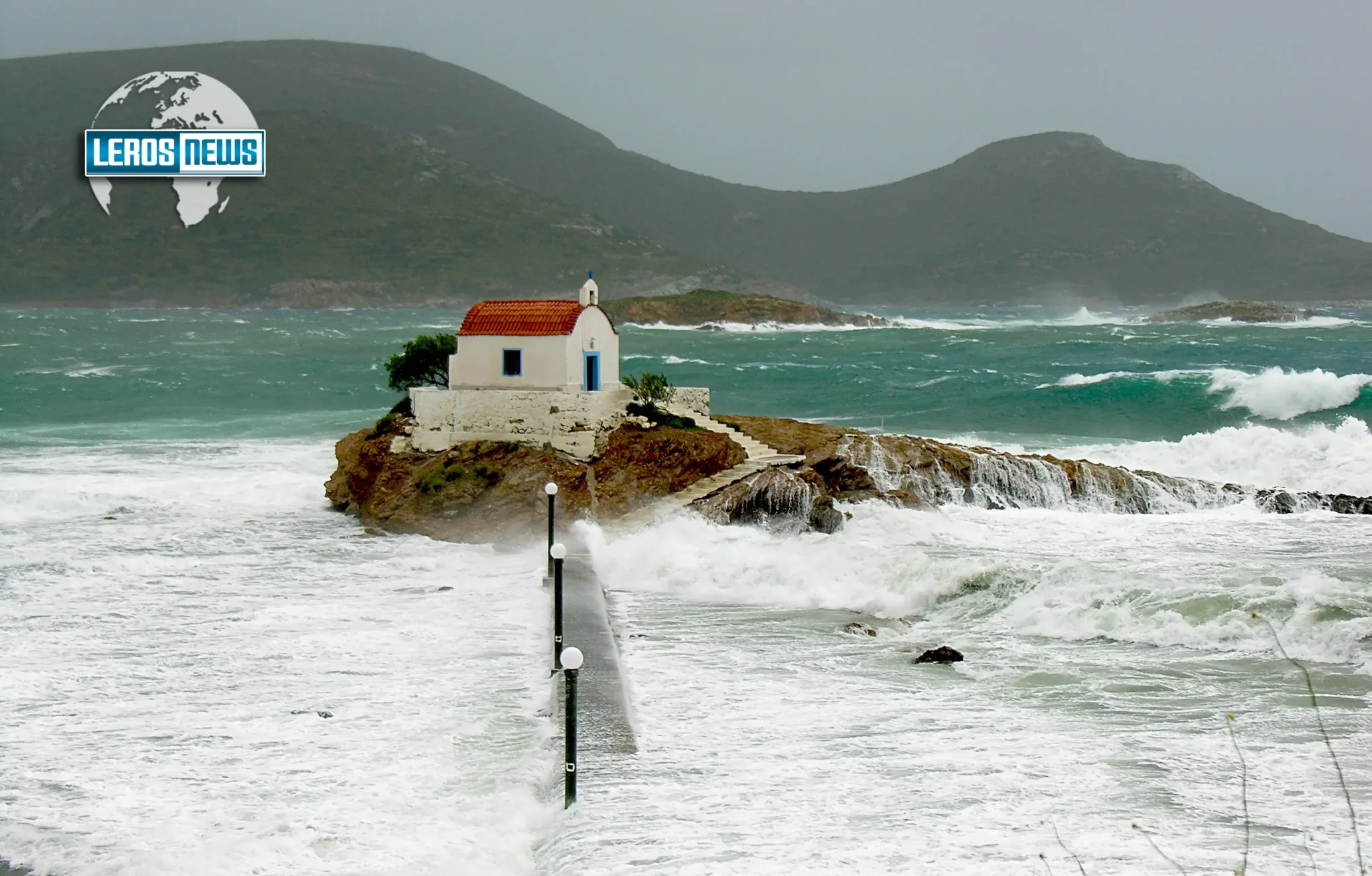


A widespread rise in sea level has been recorded across the Aegean over the past ten days, from the coast of Crete to the Thracian Sea.
Images of beaches being inundated by heavy waves made the phenomenon particularly visible, but researchers say it is part of a broader process affecting the Aegean and the south-eastern Mediterranean, rather than a purely local event.
The observations prompted detailed analysis by the Coastal Research Laboratory, using equipment installed at Heraklion Harbour in cooperation with Heraklion Port Authority.
The authority's continuing support for the research infrastructure and provision of operational data enabled a rapid, reliable assessment of the phenomenon's development.
Modern sea-level and atmospheric-pressure monitoring equipment at the harbour allowed researchers to correlate changes in water level with weather conditions accurately.
Pressure and wind explain the changes
The researchers link the general rise primarily to lower atmospheric pressure across the region.
When air pressure falls, pressure on the sea surface eases and water levels rise. When air pressure increases, sea levels fall.
Sensors at Heraklion Harbour recorded a marked fall in atmospheric pressure during February, explaining the sea-level rise observed over the same period.
A similar pattern is evident across January and February together, with pressure gradually declining while sea level increased.
Successive spells of bad weather also caused short-lived but pronounced fluctuations.
Strong south-westerly winds moved large water masses northwards and north-westwards through the process known as Ekman transport. Where water accumulated, sea levels rose further.
In parts of the Thracian Sea, the increase exceeded 50 centimetres. Southern areas, including parts of Crete, recorded changes of around 30 to 35 centimetres.
These differences reflect wind direction and strength and the shape of the coastline.
Extensive low-pressure systems over the Aegean also helped sustain higher sea levels, while persistent waves temporarily intensified coastal inundation.
Monitoring remains essential
Scientists emphasise that the event results from a combination of meteorological and oceanographic factors.
Systematic monitoring of sea level and atmospheric conditions is essential, as similar episodes can recur when low pressure, strong winds and prolonged wave activity coincide.
The Coastal Research Laboratory will continue analysing the data and informing authorities and local communities, supporting earlier understanding and management of comparable events.
Heraklion Port Authority Chief Executive Minas Papadakis said:
“The close cooperation between Heraklion Port Authority and the scientific community is proving particularly important in practice.
“By continuously operating and supporting monitoring stations at the harbour, we can obtain a timely, reliable picture of phenomena affecting both port facilities and wider coastal zones.
“Investing in knowledge and prevention is a strategic priority for us.”
Nikos Kampanis, Research Director at the Coastal and Marine Research Laboratory, said:
“The phenomenon recorded is not local. It results from a combination of meteorological and oceanographic factors across the Aegean and the south-eastern Mediterranean.
“The systematic, high-resolution monitoring we conduct with the port authority's support allows us to analyse sea-level changes in real time, contributing both to scientific understanding and operational readiness.”
The laboratory and port authority will continue monitoring marine and atmospheric parameters together, aiming to inform authorities and the public promptly about changes in the coastal environment.