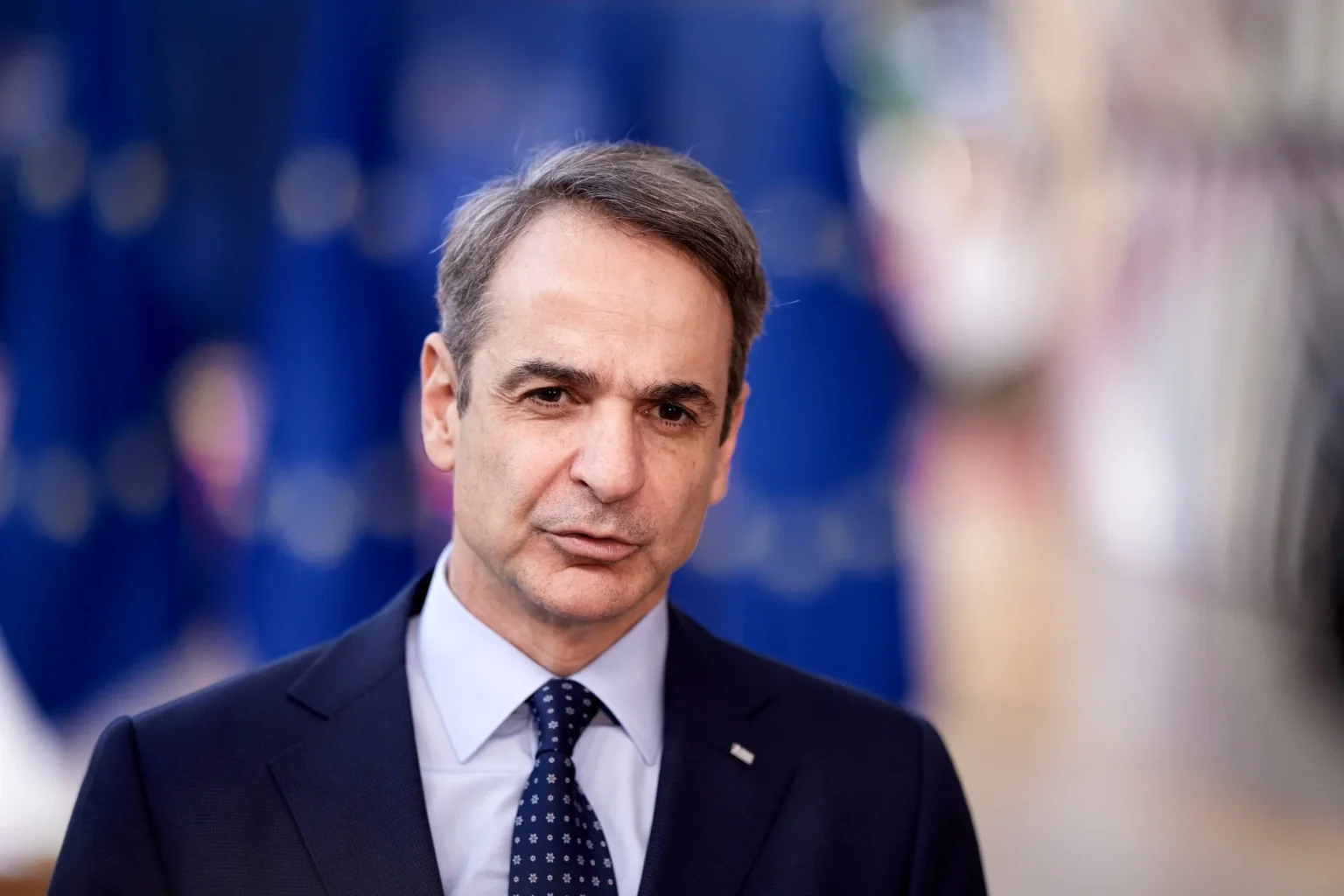


Prime Minister Kyriakos Mitsotakis announced a new package of economic measures following a fiscal surplus of €12.1 billion, aiming to support households, farmers, pensioners and debtors.
The measures address both the cost of living and private debt, with a combined cost estimated at around €500 million.
The announcements fall into two main groups: direct financial assistance and debt arrangements.
Financial support
The 20-cent-per-litre road-diesel subsidy is extended through May, supporting businesses and consumers.
The subsidy covering 15% of fertiliser purchase invoices continues until August. It potentially benefits around 250,000 farmers and legal entities in the primary sector.
Families will receive an extraordinary payment of €150 per child automatically, without an application, at the end of June. Almost one million households, comprising more than three million people, are eligible.
The annual November payment for low-income pensioners increases to €300 net. Coverage is broadened to 1.9 million beneficiaries, equivalent to 85% of pensioners over 65.
Income thresholds for the annual refund of one month's rent are raised, bringing in another 70,000 households and taking the total number of beneficiaries above one million.
Private-debt arrangements
A bank-account attachment may be lifted once a debtor has paid 25% of the debt and arranged settlement of the remaining tax obligations.
Debts of €5,000 to €10,000 can be brought within the out-of-court settlement mechanism, potentially helping around 300,000 debtors.
Liabilities that became overdue by December 2023 can be paid in 72 instalments, provided any new arrears arising after 2023 have been paid or brought into a settlement arrangement.
The Prime Minister said the fiscal performance allowed part of the outperformance to be returned to society through targeted interventions reaching most citizens.
He acknowledged that, despite improving economic indicators, higher living costs continued to burden households in Greece and across Europe.
The package, he said, would provide protection from current pressures, prioritising families with children, pensioners, tenants, farmers and people with overdue debts.
He reiterated the extensions to diesel and fertiliser support, the €150 child payment, the higher annual pensioner payment and expanded rent-refund eligibility.
He also highlighted the three private-debt initiatives: releasing attached accounts after 25% repayment, allowing smaller debts into the out-of-court mechanism and permitting up to 72 instalments for arrears dating from no later than 2023.
The approximately €500 million cost remained within the Government's fiscal-stability framework, he said.
“It is the best we can do without disturbing the economic balance,” he added, describing the measures as a message of hope that citizens' efforts were producing results.
The Prime Minister's statement
“The national statistical authority has just announced the final fiscal figures for 2025, and they are very encouraging.
“At the same time, I know well that difficult international conditions are increasing the daily burden of already elevated living costs for our households.
“That is why I insist that every collective success must gradually translate into individual wellbeing.
“The national economy is indeed resilient and performing better than expected. Yet supermarket worries, children's expenses, more expensive fuel and care for older people remain, throughout Europe and here at home.
“So today I am announcing a package of relief measures addressed to the population as a whole, as a dividend of progress returned by the state to society.
“This surplus resulted from prudent economic policy that limits unnecessary state spending and tackles tax evasion, strengthens growth by supporting income, and reduces taxes and public debt.
“It is larger than we had expected, something exceptionally rare even among the strongest economies.
“That is why our targeted interventions reach the many without ever calling fiscal balance into question. They create another shield against the current crisis, particularly for families with children, pensioners, tenants, farmers, businesses and millions of people with overdue debts.
“Specifically, the following will apply in the period ahead.
“The 20-cent diesel subsidy at distribution level is extended through May, providing relief for businesses and consumers.
“The fertiliser subsidy, covering 15% of purchase-invoice value, continues until August. This potentially concerns 250,000 farmers and legal entities operating in the primary sector.
“Extraordinary support of €150 per child will be paid to families. It will be provided without an application at the end of June and reach almost one million households, comprising over three million members — nearly 80% of families with children.
“The permanent annual payment made each November to low-income pensioners, uninsured older people and people with disabilities rises to €300 net. Its scope is also broadened to cover 1.9 million beneficiaries, equivalent to 85% of pensioners over 65.
“Income limits are also increasing so that more people can receive the annual refund of one month's rent. Another 70,000 households benefit, supporting over one million tenants in total, or 86% of the total.
“Let me also focus separately on our bold private-debt initiatives. These decisions help millions of debtors while freeing up economic activity.
“First, a debtor's attached bank account can now be released once 25% of the debt has been repaid and the remaining obligations to the tax administration have been settled or arranged.
“Second, debts from €5,000 to €10,000 can also enter the out-of-court mechanism, serving around 300,000 interested parties.
“Third, and most importantly, debts that became overdue by December 2023 can now enter a 72-instalment arrangement, with the sole condition that any new arrears after 2023 have been repaid or arranged.
“The economic team will explain these provisions. Their cost is around half a billion euros.
“They come on top of this year's budget measures, the major tax reform already being implemented, the minimum-wage increase and improvements in annual earnings for 2026, and of course the €300 million already provided as protection against the consequences of the conflict in Iran.
“I know many will argue the measures are insufficient. Indeed, no state, however powerful, can face the consequences of a global economic crisis alone.
“But this is the best we can do without disturbing the economic balance we worked so hard to achieve.
“It is Greece's share of security and progress, achieved in an uncertain international environment and shared with society.
“It is also a message of hope: that the efforts of Greek women and men are producing results and that, despite the difficulties, we can be optimistic.”