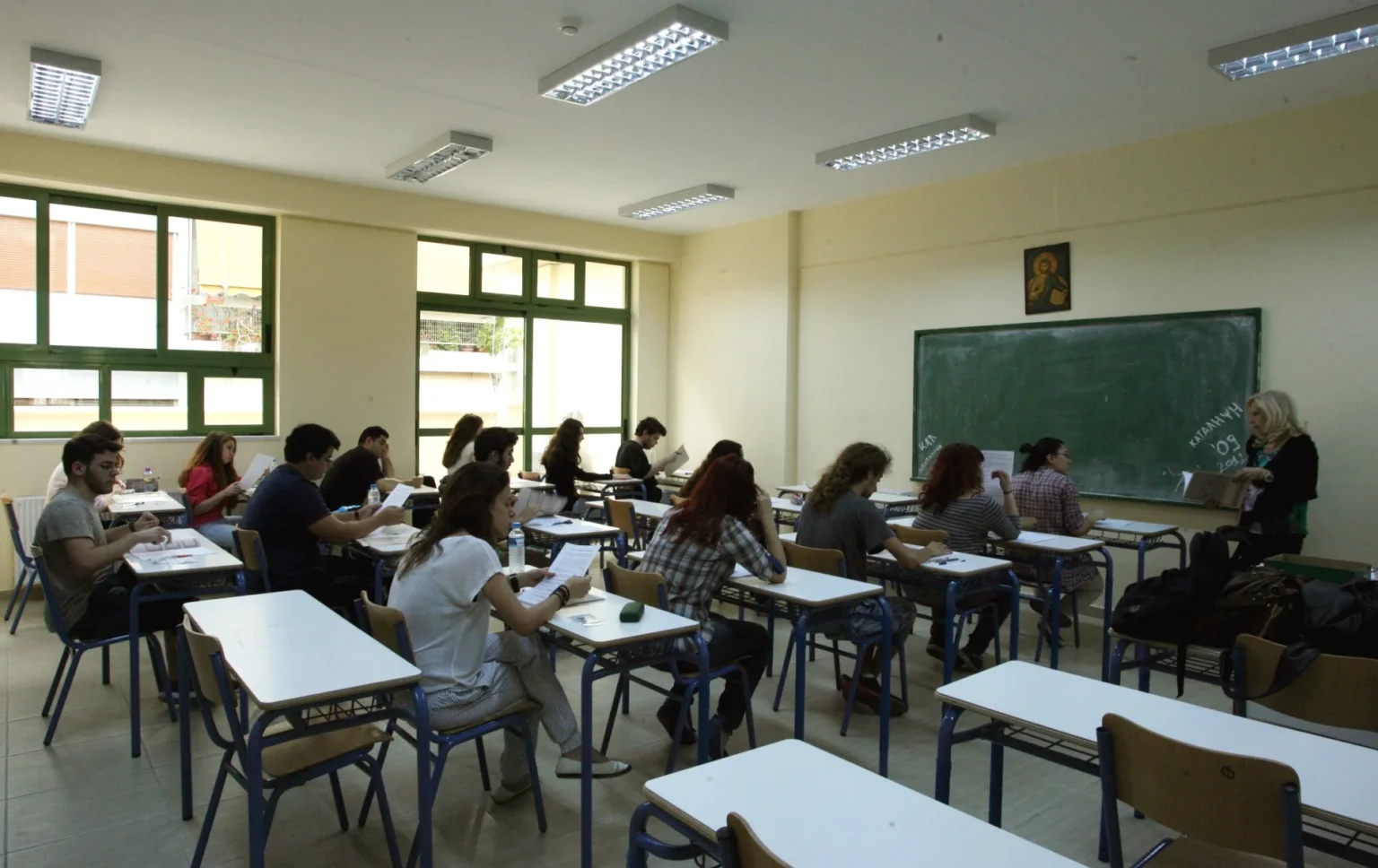



Pupils in the third year of Greek lower secondary school will be able to take free electronic examinations for the State Certificate of Language Proficiency, e-KPG, from the 2026–2027 school year.
The initiative forms part of a wider plan to strengthen foreign-language education in state schools.
It covers the four foreign languages taught in the public system — English, French, German and Italian — directly connecting school teaching with official state certification.
Funding of €20.876 million has been secured through the National Development Programme 2026–2030 to create a modern, reliable and accessible electronic certification system, developed progressively nationwide.
A policy taking shape since 2020
The direction began to emerge in 2020, when Sofia Zacharaki, then Deputy Education Minister responsible for primary and secondary education, expanded foreign-language learning at younger ages, including English in kindergarten.
After her return as Education Minister in 2025, the policy entered a new phase.
In May, plans were announced for a modern, unified foreign-language education framework, providing continuity from the earliest school years through upper secondary school.
Strengthening and upgrading the State Certificate of Language Proficiency was also identified as a public priority, the Ministry said.
In July that year, extending language certification within schools was included in the broader plan to improve school education.
The next decisive step was announced in Parliament in March 2026: free access to digital state language-certification exams for third-year lower secondary pupils.
In April, the €20.876 million allocation was activated to certify pupils' language skills and move the qualification into the digital era.
How e-KPG will work
Examinations will take place entirely by computer at dedicated Electronic Examination Centres, under the Education Ministry's responsibility.
The Ministry will issue qualifications at all six levels of the Common European Framework of Reference for Languages.
The system will use modern assessment tools, including Computerised Adaptive Testing, which progressively adjusts question difficulty to the candidate's performance, allowing a more accurate, individual assessment.
The responsible ministry services, the National and Kapodistrian University of Athens, Aristotle University of Thessaloniki and the Computer Technology Institute and Press Diophantus are cooperating on development and implementation.
Assessment is aligned with the Common European Framework and Greece's Unified Foreign Languages Curriculum, so exams relate directly to school teaching and pupils' knowledge and real experiences.
Pilot in 2026, wider use in 2027
Implementation will be gradual to ensure reliability and smooth operation.
The first pilot is planned for late 2026, involving a limited number of education directorates and pupils.
Wider application is planned in 2027, with progressive nationwide development through 2030.
The State Certificate of Language Proficiency is an official state qualification awarded under Law 2740/1999.
Sofia Zacharaki: from knowledge to certification at no family cost
“Strengthening foreign-language education is an effort I have consistently served since my first term at the Education Ministry,” Ms Zacharaki said.
“In 2020 we started from a simple but meaningful principle: children should encounter foreign languages earlier and more systematically in state schools.
“In subsequent years we built on that direction, and today we take the next major step.
“From the 2026–2027 school year, third-year lower secondary pupils will, for the first time, be able to take free electronic examinations for the State Certificate of Language Proficiency in English, French, German or Italian.
“State schools should not only teach knowledge. They should give every child the opportunity to certify it and use it as an asset in life.
“That is why we are transferring to the public education system a cost that families have borne until now.
“We want a child in Athens, on an island or in a mountain village to have the same access to an official, recognised qualification, regardless of family income.
“This is the cycle we want to complete: state schools teaching children, enabling them to acquire knowledge and offering a path to certify it.
“Equal access for every child, without a financial burden on their family.
“Language proficiency is knowledge, a skill and an asset for study, work and the world opening up before our children.
“Equal access to its certification means equal opportunities in practice.”