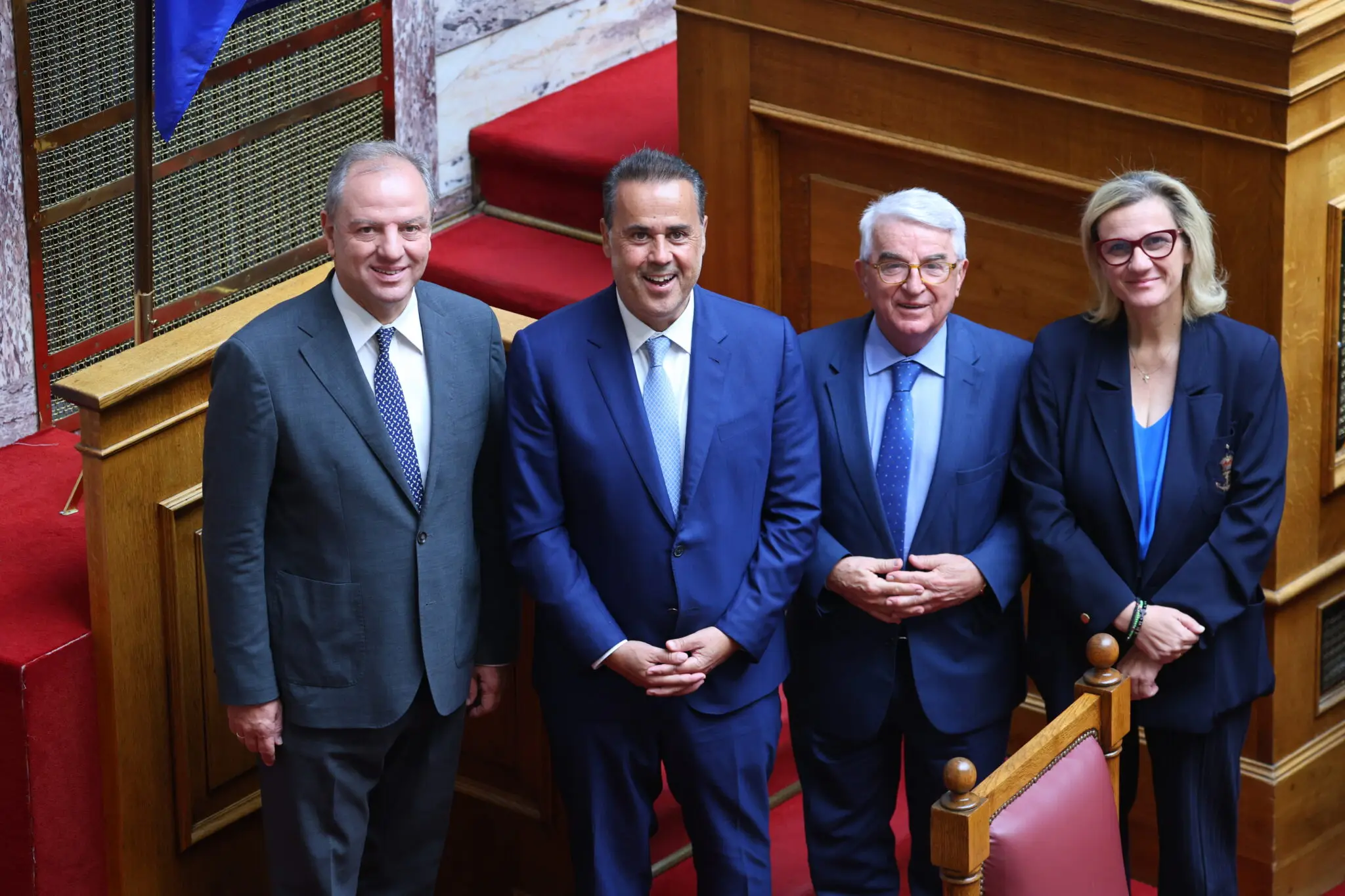




Parliament has approved the Environment and Energy Ministry's bill expanding EYDAP and EYATH's responsibilities in water management.
In a roll-call vote involving 288 MPs, 157 supported the bill and 131 opposed it.
In his closing speech, Environment and Energy Minister Stavros Papastavrou said the existing water-management system had reached its limits.
“Anyone who says no to the reform we are advancing says yes to preserving the old regime, yes to fragmentation and yes to continuing poor management of water resources,” he said, arguing that the bill established a new, holistic system.
“We cannot continue losing five or six drops of water out of every ten. We cannot continue with waste and ageing networks. Losses of 50% are unacceptable,” he said.
Citing the figures available to him, the Minister said Greece ranked nineteenth worldwide for water-scarcity risk and second within the EU for water stress.
Problems in Halkidiki and Thessaloniki
Mr Papastavrou also referred to a prosecutor's intervention concerning municipalities in Halkidiki and Thessaloniki after bacteria were detected above permitted limits.
“There is no clean water there at the moment. A prosecutor has intervened to investigate water quality,” he said.
He also referred to allegations of illegal water abstraction in Ilia and criminal groups in Messinia which, he said, controlled irrigation-water distribution, extorted farmers and burnt fields when farmers refused to accept their allocation decisions.
“Ending fragmentation is a national choice. Will we continue with one body responsible for the tap and another for sewerage in the same house? This is a patchwork,” he said.
PASOK accuses Government of commercialisation
Earlier, PASOK rapporteur Manolis Christodoulakis expressed his party's categorical opposition, describing the bill as an attempt to commercialise water.
“The Government says it cares about water's public and social character. Will it agree to the constitutional protection of water we propose in the constitutional revision, or will it back down?
“Does the Government guarantee that costs and tariff prices will not increase?” he asked.