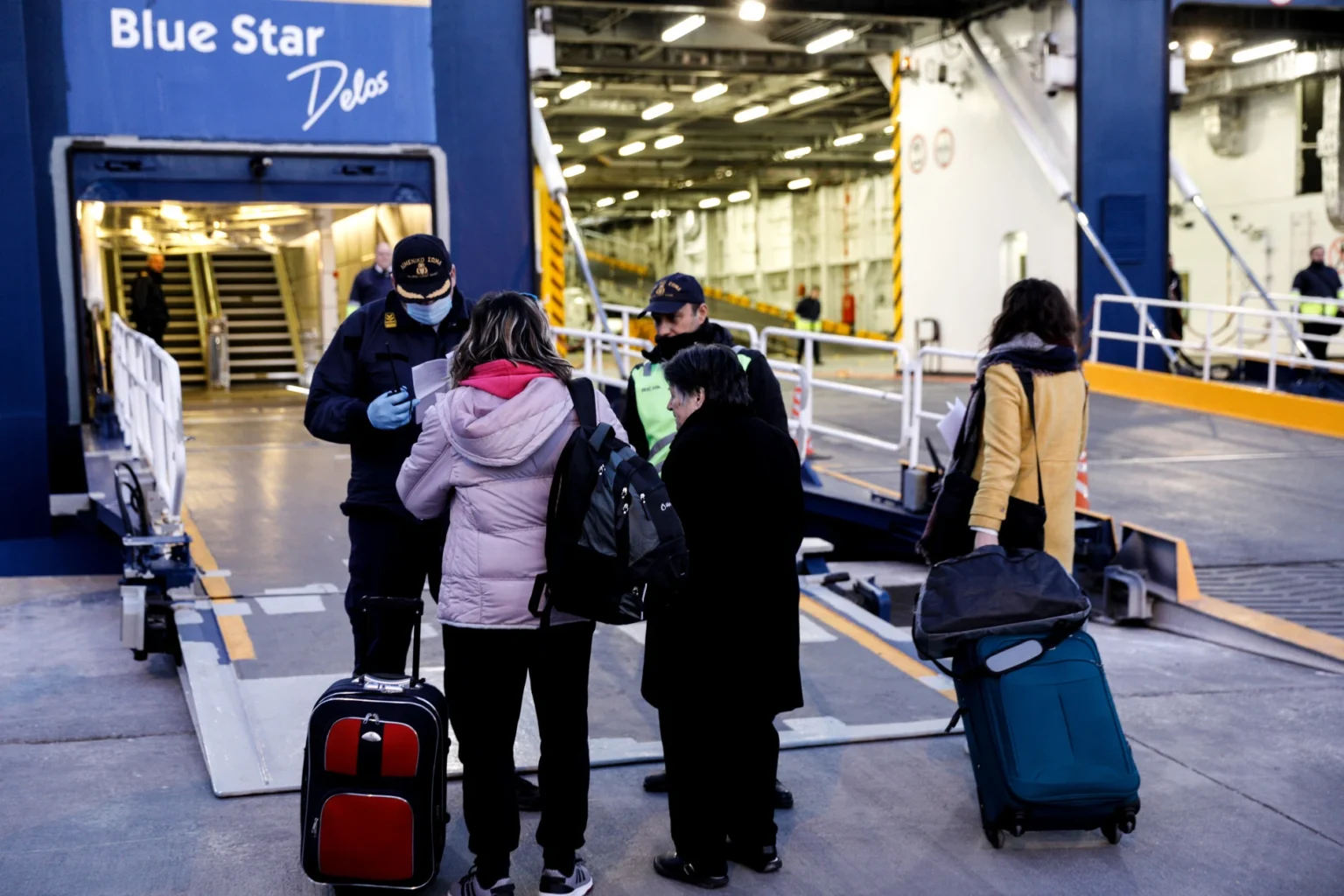



The first signs of pressure from soaring fuel costs are already visible in Greece's ports and ferry timetables.
Three conventional passenger-and-vehicle ferries have ended their services earlier than was usual in previous years, as industry forecasts point to a particularly demanding winter.
Fast Ferries' Aikaterini P and Golden Star Ferries' Superferry, operating from Rafina to the Cyclades, have withdrawn early. Attica Group's Lefka Ori has also left its Dodecanese route earlier than usual.
The latter withdrawal has already reduced the number of ships serving that route from three to two.
Superferry completed its sailings on 13 September and arrived in Piraeus. Aikaterini P entered the Perama ship-repair zone the following day.
Both have begun their annual lay-up, but doing so in mid-September illustrates the pressure on the sector.
Marine gas oil nearly doubles since February
Marine Gas Oil, a key ferry fuel, has risen sharply within months, changing the cost of every voyage.
According to ferry-industry figures, MGO reached €1,300 per tonne on 9 September, compared with €993 on 1 June and €658 on 24 February.
That represents an increase of 30.9% in around three months and 97.6% between February and September.
One of a ship's most important operating expenses has therefore almost doubled in less than seven months.
The burden is greater for fuel-intensive conventional vessels, especially as the summer season ends and passenger occupancy declines.
During summer, large numbers travelling to the islands help operators absorb some of the increase. From autumn, ships must continue sailing with substantially fewer passengers while fuel, crew and other operating costs remain high.
Industry executives do not rule out further timetable changes if fuel prices stay at these levels.
The problem is complex because any reduction must also account for islands' need for adequate year-round links with the mainland.
Calls for more flexible operating periods
The developments have revived a longstanding industry debate over how much flexibility operators have when placing a conventional ferry on a route.
Under the existing system, deployment generally entails a twelve-month commitment. Industry representatives argue that this does not always reflect the Greek market's substantial seasonal variation.
Operators say the gap between summer and winter demand requires greater adaptability.
A ship that is indispensable in July and August may spend several months operating with much lower traffic and high costs.
A more flexible system, allowing shorter deployment periods under specified conditions, is therefore being examined.
Supporters argue that requiring a company to keep a vessel on a route all year can sometimes deter it from deploying the ship in the first place.
Other options under discussion include reducing some passenger-and-vehicle ferry frequencies during very low-demand months and using ro-ro ships for part of the freight traffic.
That could prevent large conventional ferries from making journeys primarily to carry lorries and goods.
Limited room to respond
Ferry companies have relatively few ways to react to a sudden fuel-price rise.
An airline, for example, can reduce capacity by using a smaller aircraft or adjust fares relatively quickly. A large passenger-and-vehicle ship cannot easily be replaced with a smaller vessel whenever demand falls.
Operators have also avoided general fare increases over the past two years following interventions by the Maritime Affairs Ministry.
The Government has begun covering from the state budget the cost of compulsory discounts for specified social groups, taking on part of a burden previously borne by companies.
Even that intervention, however, does not eliminate the pressure from fuel prices that have nearly doubled within a few months.