


Greece faces further EU court proceedings over waste management after the European Commission concluded that it was still failing to apply European rules on landfill and waste treatment correctly, despite earlier warnings and penalties.
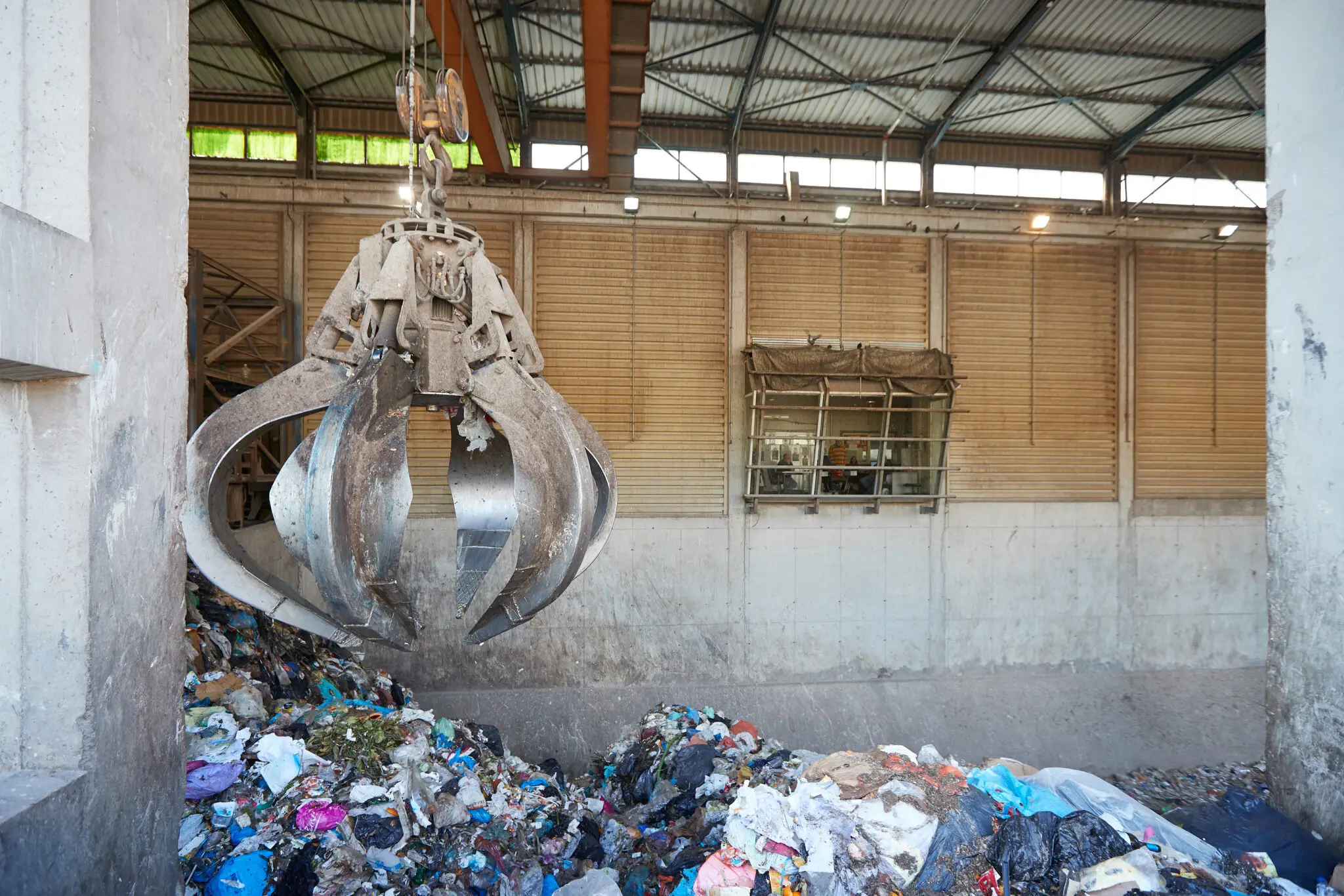
Of the 81 landfill sites remaining under examination after three closed, 66 — around 81% — were considered non-compliant.
The Commission also found insufficient capacity to treat mixed municipal waste before disposal.
The case dates back five years. The first warning, in November 2021, identified problems at 84 landfills and shortcomings in Greece's integrated waste-management infrastructure network based on best available techniques.
A reasoned opinion followed in December 2024. The Commission then assessed Greek authorities' responses and the available evidence.
Three sites closed, but improvements at the remaining 81 were insufficient to satisfy Brussels, leading to the referral to the Court of Justice of the European Union.
The Environment Ministry had announced in 2022 that fines for illegal dumps would be eliminated within two years. Greece, alongside Cyprus, nevertheless faces scrutiny over compliance with the Landfill Directive, 1999/31/EC, and the Waste Framework Directive, 2008/98/EC.
The first governs landfill operation and requires waste to be treated before disposal. The second establishes rules for prevention, recovery and disposal that protect health and the environment.
The Commission considers that Greece has secured neither adequate landfill compliance nor the treatment infrastructure needed before final disposal.
Earlier penalties
A further adverse judgment would not be Greece's first costly waste case.
The report recalls a ruling the previous year over failure to comply with a 2014 judgment requiring the closure of a landfill inside a national marine park in loggerhead turtle habitat.
The overloaded, malfunctioning site posed health and environmental risks.
Failure to comply resulted in a €5.5 million lump-sum penalty and €12,500 for every day of delay until full compliance.
Recycling remains low
The problem extends beyond the 66 landfills to the whole chain preceding disposal.
Greece recycles only 18.5% of municipal waste, against European recycling targets of 60% by 2030 and 65% by 2035.
More than 80% of waste is still landfilled. The EU Landfill Directive's limit is 10% or less by 2035.
The EU deadline is set out in the consolidated directive: https://eur-lex.europa.eu/eli/dir/1999/31/2024-08-04/eng
The European Court of Auditors' report on 2014–2024, published at the end of the previous year, placed Greece among countries lagging across key objectives, including reducing landfill, preparing municipal waste for reuse and recycling, and recycling packaging.
Problems begin with collection. The original report notes separate-collection requirements for paper, metals, plastics and glass from 2015, followed by biowaste from the end of 2022 and textiles from January 2024.
Yet in 2022, only 18% of all municipal waste was collected separately.
Biowaste accounts for around 37% of municipal waste. Separate collection has not been implemented nationally, only in some municipalities, despite its potential to improve recycling and compliance substantially.
Infrastructure and funding delays
According to the auditors' report cited, only eight of 33 waste-management installations planned during 2011–2024 had been built and were operating, while four other installations already existed. The remaining 25 planned facilities were at different stages of implementation.
Only three of 28 planned facilities for separately collected biowaste were operating.
Significant European resources had been allocated and programmed. Nevertheless, Greece used only 76% of available cohesion-policy waste funding during 2014–2020, compared with an EU average of 91%, while initially planned allocations for the sector had been reduced by around 30%.
Among sixteen projects examined across four countries, thirteen — including all Greek projects in the sample — suffered substantial delays.
Across the full sample, delays ranged from three months to six years, averaging about three years per project.
National planning and landfill charges
The auditors also examined Greece's National Waste Management Plan 2020–2030.
According to their assessment, projected waste generation had been underestimated by around 10%, while infrastructure needs such as repair centres and recycling points were omitted or underestimated.
Funding figures were presented in aggregate, rather than by project or investment category.
While EU funding was shifting towards prevention, reuse and recycling, Greece continued prioritising projects lower down the waste hierarchy.
Tools capable of changing producer and consumer behaviour also remained only partly implemented.
Pay-as-you-throw had been legislated but was used only to a limited extent by 2024. Charges were still generally based on property floor area rather than actual waste volumes.
Vari–Voula–Vouliagmeni Municipality and a pilot in Chalandri stood out, but were insufficient to change the overall picture.
The measure had not been meaningfully applied to major waste producers either, although tourism and catering were estimated to generate around 60% of organic waste.
The landfill levy was introduced in legislation in 2012 but began being collected in 2022 at €20 per tonne.
It reached €35 in 2025 and stands at €35–€45 in 2026, depending on the number of operating waste-management centres in each region.
The European Court of Auditors notes that it remains below the EU average.
Meanwhile, 164 municipalities have challenged the levy before the Council of State, questioning its constitutionality and citing, among other matters, limited treatment infrastructure.
Deposit-return scheme still delayed
Implementation of the plastic-bottle deposit-return scheme has also faced repeated extensions.
Provided for in 2022 legislation and considered necessary for achieving a 77% separate-collection target for plastic bottles, it had not yet begun operating at the time of the report.
The Government's 2024 decision to exclude glass bottles further complicated Greece's efforts to meet its targets.